
Reviewed · ART NOUVEAU WALKS
Walking Tour: Discover Riga’s Old Town and Its Art Nouveau Gems
Old Riga pulls you in fast. In just two hours, this walk stitches UNESCO Old Town sights to Art Nouveau architecture so you know what you’re looking at, not just where to stand. You’ll cover cobblestone streets and major landmarks, with a guide pointing out details that are easy to miss on your own.
I love how practical the route feels. You start in the core civic area, then work outward through medieval churches, the famous Black Heads house, and whimsical facades like the Cat House. I also really liked the human touch from Irana, the guide who shared clear architecture and history notes and a personal way of seeing Riga that made side streets feel worth your time.
One possible drawback is the format. It is a walking tour, so you’ll be on cobblestones for the whole stretch. If your feet get cranky, plan for comfort first, then enjoy the rest.
In This Review
- Key things I’d plan around
- Why Riga’s Old Town and Art Nouveau Gems Fit a Two-Hour Walk
- Rātslaukums 7 Start and the Dome Square Finish
- Town Hall Square: Your Quick Map of Old Riga’s Power Center
- St. Peter’s Church, the Medieval High Point
- Three Brothers and the Latvian Museum of Architecture
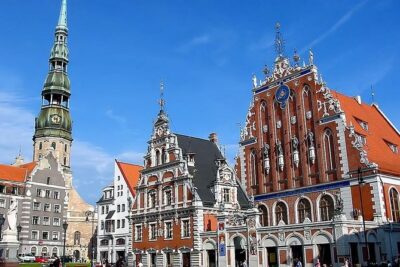
- House of the Black Heads: Grand, Royal, and Right by the Civic Core
- Cat House on Līvu Square, Wrought-Copper Cats with Attitude
- Riga Cathedral: From 1211 to Cultural Life in the 1900s
- Price and Value for a $34.72, Two-Hour Old Town Guide
- What the Walking Pace Means for You
- Who This Tour Suits Best (and Who Might Want Something Else)
- Should You Book This Riga Old Town Walk?
- FAQ
- How long is the Walking Tour: Discover Riga’s Old Town and Its Art Nouveau Gems?
- What is the price per person?
- Where do I meet, and where does the tour end?
- What time does the tour start?
- Is admission included at the main stops?
- Is the ticket digital?
- How big is the group?
- Does the guide use any sound equipment?
- How far in advance is this usually booked?
- What is the cancellation policy?
Key things I’d plan around
- Two-hour Old Town focus that fits a tight schedule without rushing the big stops
- Town Hall Square as your orientation hub, then a logical flow through churches and courtyards
- Art Nouveau spotting built into the route, not treated like a separate stop
- Famous Riga icons in one walk, like the House of the Black Heads and the Cat House
- Irana-style guiding with lots of architecture and history context to make details click
More Art Nouveau streets to walk:



Why Riga’s Old Town and Art Nouveau Gems Fit a Two-Hour Walk
Riga’s Old Town is the kind of place where your eyes need training. The streets look charming, but the real payoff is in the buildings. This tour is designed for exactly that. You spend about two hours moving through key areas, so you get a clear sense of the city center before your energy runs out.
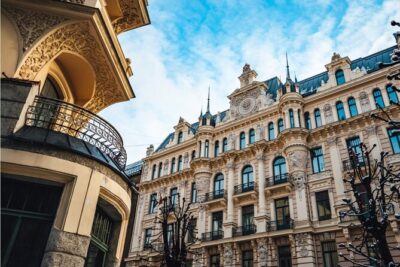
The big theme is contrast. Old Riga gives you medieval landmarks and civic squares. Then you get pulled toward the flourish of Art Nouveau, which Riga is known for. You’ll see the mix in how buildings are framed, how details are carved, and how the streets open up to show facades that would be hard to spot solo.
And because it’s a guided route, you’re not just “touristing.” You’re learning what to notice. That is how this kind of city walk earns its keep.
Rātslaukums 7 Start and the Dome Square Finish
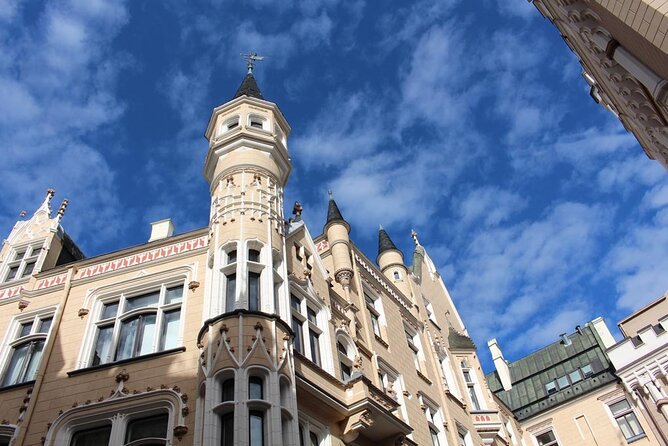
You meet at Rātslaukums 7 in central Riga, with the tour starting at 1:00 pm. The end point is Dome Square, which the tour describes as the Old Town’s heart, where activities funnel in from several streets.
Why this matters to you: a good city walk has momentum. Starting in one of Old Riga’s key blocks makes it easier to understand the layout. Ending at Dome Square helps you keep sightseeing after the tour, because it’s a natural center you can fan out from. It also means you’re not stuck tracing your steps back to where you started.
If you want an easy win, arrive a few minutes early and take a quick look around at street and square geometry. Old Riga’s layout rewards that tiny bit of prep.
Town Hall Square: Your Quick Map of Old Riga’s Power Center
The tour’s first stop is Riga Town Hall Square, a logical place to begin because it gathers several of the city’s must-know sights. In this area, you’re set up for the rest of the walk, since civic buildings and churches shape how the Old Town feels.
From here, the tour also covers the nearby core highlights you’d otherwise chase around separately. You’ll see St. Peter’s Church, Convent Yard, St. John’s Church and St. John’s Yard, and you’ll connect toward Līvu Square. Even if you remember only one thing, remember this: square to church to square is the rhythm of Old Riga.
The benefit for you is mental clarity. Instead of popping into random attractions, you’re building a picture of how the city organized itself, socially and visually.
St. Peter’s Church, the Medieval High Point
Next up is St. Peter’s Church, described as the city’s dominant and highest peak, and one of the oldest and most valuable examples of medieval monumental architecture in the Baltic States. That is a big claim, but it explains why the church is always treated as a landmark.
What you should pay attention to is scale and presence. A “highest peak” kind of building changes how the whole town feels. Even without perfect line-of-sight everywhere, you start mentally placing Riga’s skyline around this point.
One practical note: since the tour keeps moving, don’t get stuck trying to take the perfect photo angle. Briefly look, absorb the proportions, then let the guide’s explanation steer your attention to specific features.
More on foot around Riga:
- Riga Old Town walking tour★ 4.5 · 304 reviews
- Riga Old Town Walking Tour in a Small Group★ 4.5 · 132 reviews
- Private Riga Old Town Walking Tour★ 5.0 · 62 reviews
- Old Town Walking Tour of Riga★ 4.5 · 28 reviews
- 2 Hours Walking Tour in Legends and Secret of Riga’s Old Town★ 5.0 · 26 reviews
Three Brothers and the Latvian Museum of Architecture
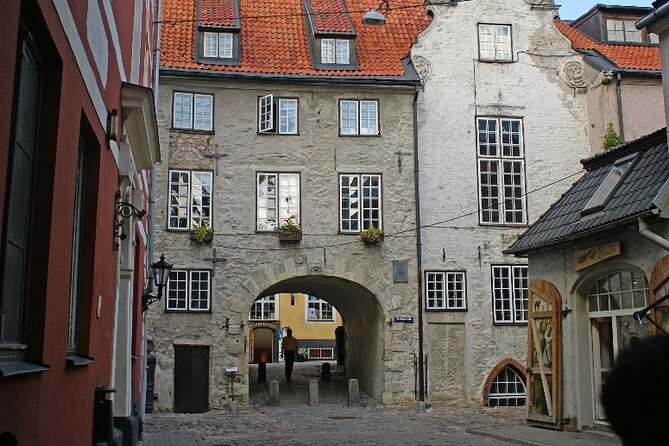
At the Three Brothers, you’re standing in one of Riga’s most story-driven architecture stops. The tour frames it as the oldest residential complex in Riga that survived from the 15th century. The three houses were once cramped together, and they became known as the Three Brothers, tied to a legend about men of the same fa… (the rest of the legend isn’t spelled out in the tour notes, but the point is that there is a local story attached to the buildings).
Why this stop works on a walking tour: it gives you a human scale. Churches and grand houses are easier to read from far away. Residential complexes force you to notice smaller architectural cues, like how structures sit shoulder-to-shoulder and how the street’s edge shapes the buildings.
You’ll also be at the Latvian Museum of Architecture, which adds a “why this matters” layer. Even if you do not go inside on the walk, seeing the complex helps you connect Riga’s architecture to lived space, not just monuments.
House of the Black Heads: Grand, Royal, and Right by the Civic Core
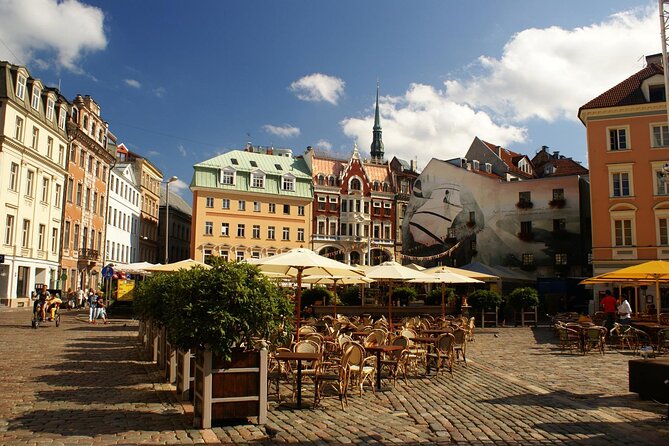
Then the walk turns to the House of the Black Heads, located in the heart of Old Riga near Town Hall Square, facing Riga City Council. The tour calls it grand and royal, and says it’s a must-see for every city guest.
This is a stop where you benefit from guided context. A building like this can feel like a pretty facade if you just pass by it. With a guide, you understand why this house belongs in the core narrative of Old Riga, especially because it sits right by the civic center.
As you look, focus on the “presence” of the house, how it faces the square, and how its style contrasts with the nearby medieval elements. That contrast is part of Riga’s identity, and the tour uses it to keep your eyes from glazing over.
Cat House on Līvu Square, Wrought-Copper Cats with Attitude
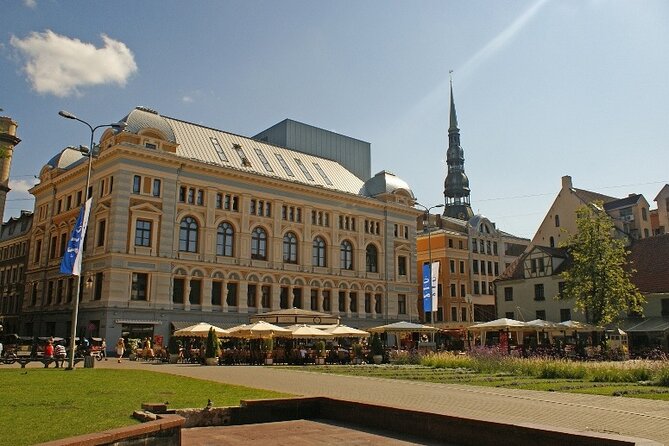
If you want one stop that feels like a Riga character, it’s the Cat House. On Līvu Square, you’ll see wrought-copper cats on corner turrets, their backs arched and tails poised as if readying for the final leap. The tour also points out the building faces the Great Guild.
This is more than a cute photo moment. It’s a reminder that Riga’s architecture has a playful streak, even in formal city streets. The cats are a quick entry point for understanding that the city did not treat buildings as only functional. People wanted personality in stone and metal.
Timing helps here. Since this is a short stop in a two-hour route, don’t overthink it. Look at the cats, then quickly shift your attention to the facade around them so you catch how the whole building frames the square.
Riga Cathedral: From 1211 to Cultural Life in the 1900s
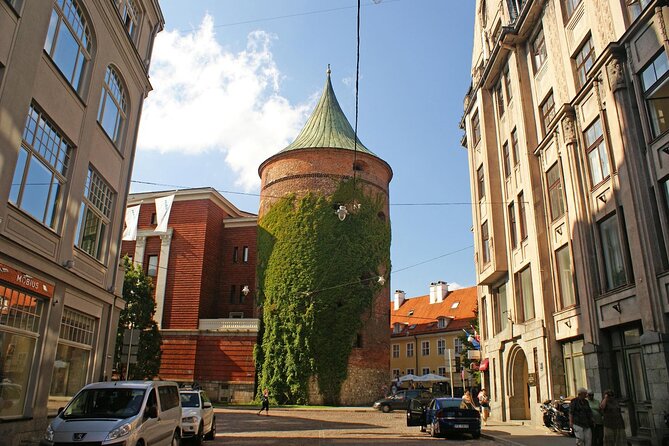
Next comes Riga Cathedral, described as having won hearts since July 25, 1211. The tour notes that its current appearance came at the end of the 19th century. Today, it still plays an active role in Old Riga’s life, including concerts of local… (the tour notes cut off, but the key idea is ongoing cultural events).
Why I like putting this stop in the middle to late part of the walk: the cathedral ties together time periods. You get the sense of depth, then you see evidence that buildings keep evolving. The church is not only a relic you read about. It’s an active venue.
Practical tip: if you want the best experience, take a moment to stand where you can see the full church frontage, then let the guide explain what changed when the appearance took its late 19th century form.
Price and Value for a $34.72, Two-Hour Old Town Guide
At $34.72 per person for about two hours, the value comes down to what you do not have to figure out. You get a local tour guide, a structured route with clear landmarks, and a system to help audibility on larger days.
The tour includes a tour guide system, used to enhance hearing if there are more than 10 participants. It’s a small thing, but it matters. Riga’s streets and squares can make it hard to catch every word, especially if you’re moving. Better sound means you actually benefit from the architecture and history explanations.
Group size is also capped: minimum 2 and maximum 20. That size is big enough that you get energy, not so big that you feel like you’re stuck behind a crowd.
If you like city walks where the guide helps you “read” the place, this price feels more like paying for interpretation than paying for walking.
What the Walking Pace Means for You
This tour is built for motion through the Old Town. That’s part of the charm, but it also changes how you should prepare.
Wear comfortable shoes. The Old Town is full of cobblestones, and the tour is mostly outdoors. Bring water. Take short pauses for photos, but keep moving because the route flows from square to church to iconic facade.
Also, keep your expectations realistic. This is not an all-day museum plan. It’s a curated route that hits big highlights and uses guide context to turn each stop into a clearer piece of the Riga puzzle.
Who This Tour Suits Best (and Who Might Want Something Else)
This tour is a strong match if you:
- Enjoy architecture details and want a guide to point out what to notice
- Want a compact way to see major Old Town sites without stitching together your own route
- Appreciate Riga’s Art Nouveau identity alongside medieval landmarks
- Have limited time and want a clear ending point in Dome Square
It may be less ideal if you need a fully step-free experience, since it’s a walking tour across cobblestones. If that applies, you might prefer a format that reduces uneven walking time or offers more flexibility.
Should You Book This Riga Old Town Walk?
Yes, if you want your first Riga dose to be both efficient and meaningful. The tour’s biggest strength is focus: it keeps you in the parts of Old Riga that explain the city quickly, and it layers in Art Nouveau gems so your photos and memories come with context.
Book it especially if you like the idea of learning from a guide like Irana, who clearly brings both architecture notes and a personal take that helps you see more than the basics. The route also ends in Dome Square, which is a smart place to continue exploring on your own.
Skip it only if you already know Riga architecture well or if you cannot handle a steady walking pace on cobblestones.
FAQ
How long is the Walking Tour: Discover Riga’s Old Town and Its Art Nouveau Gems?
It lasts about 2 hours.
What is the price per person?
The price is $34.72 per person.
Where do I meet, and where does the tour end?
You start at Rātslaukums 7, Centra rajons, Rīga, LV-1050, Latvia, and the tour ends at Dome Square, Doma laukums, Centra rajons, Rīga, LV-1050, Latvia.
What time does the tour start?
The start time is 1:00 pm.
Is admission included at the main stops?
The listed stops show admission ticket free.
Is the ticket digital?
Yes, it uses a mobile ticket.
How big is the group?
The tour has a minimum group size of 2 and a maximum of 20 participants.
Does the guide use any sound equipment?
Yes. A tour guide system is included to enhance audibility if there are more than 10 participants.
How far in advance is this usually booked?
On average, it is booked 19 days in advance.
What is the cancellation policy?
You can cancel for free up to 24 hours in advance for a full refund. Changes within 24 hours of the start time are not accepted. If the minimum number of travelers is not met, you’ll be offered a different date or a full refund.
Newest entries out of Riga
- Riga Beer Bike
- Sunrise or sunset SUP/kayak Adventure in the bog from Riga
- Create your own Gin at Riga Gin Laboratory
- Small Group – Hill of Crosses, Jelgava and Jurmala / 2 Countries
- Discover Riga’s most Photogenic Spots with a Local
- Private Chocolate Masterclass in Old Town of Riga
- Day trip to Tallinn from Riga
- Riga City Tour and Panoramic Ride on the Riga Eye
Art Nouveau Walks, compared.
Ultimate Art Nouveau Experience in Riga – Private Tour
Read our review →
Riga’s Architecture: A self-guided audio tour of the city’s art nouveau history
Read our review →
Explore Riga’s Art Nouveau district with a Local
Read our review →More Riga days like this