
Reviewed · RIGA
Create your own Gin at Riga Gin Laboratory
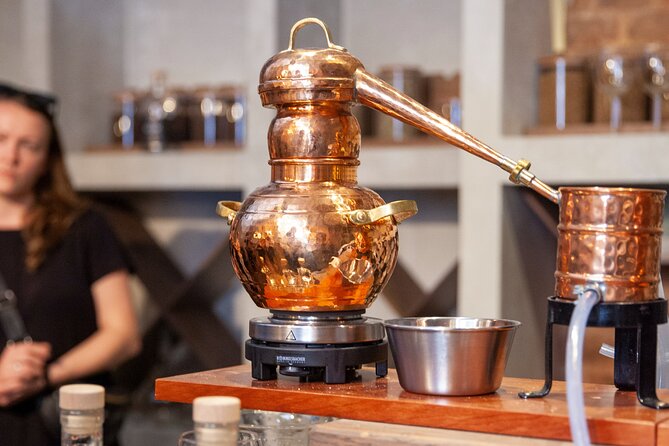
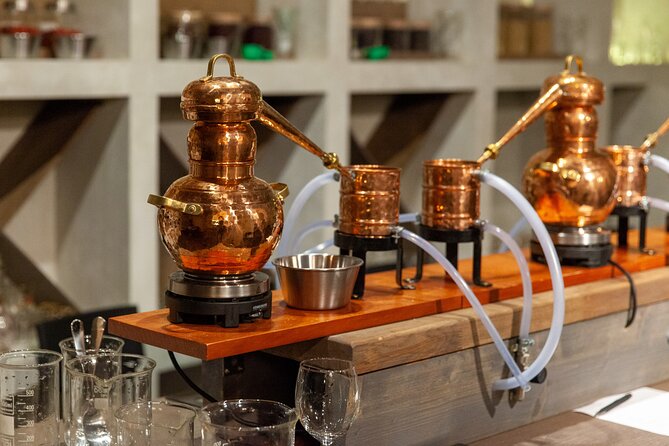
Gin fans get a lab coat moment. This Riga Gin Laboratory master class turns you into a distiller for about 2 hours, with a guided run through gin origins and the production steps, then lets you craft your own recipe with botanicals. You also get to enjoy tasting of Dvoretsky family spirits before you start mixing your own.
I like two things in particular: you learn the whole craft flow, from distillation to bottling concepts, and you do not stay stuck in theory. I also like the way the session uses Dvoretsky family products as a tasting foundation, so you can calibrate your palate while you’re learning.
One thing to consider is the schedule and pace. The session runs Monday to Friday in the early evening window, so it can be tight if your Riga days are packed, and the time is only 2 hours, meaning you’ll focus on making a decision quickly rather than taking a slow, multi-session approach.
In This Review
- Key points you should care about
- Riga Gin Laboratory, what the two-hour class is really like
- Getting there in Riga: meeting point and evening timing
- The gin origins lesson: why the story matters before you mix botanicals
- From distillation to bottling concepts: what you learn step by step
- Tasting Dvoretsky family spirits: calibrate your palate first
- Creating your own gin recipe with botanicals, in plain English
- Distilling your own gin: what to do during the hands-on portion
- Facilities and host style: why the room matters
- Price and value for $114.98 per person
- Who should book Riga Gin Laboratory
- Quick FAQ
- FAQ
- How long is the Riga Gin Laboratory experience?
- What does the class include?
- Where do I meet for the tour?
- What time does it run?
- How much does it cost?
- Is it private or shared?
- Is there an age requirement?
- Do I get a mobile ticket?
- Should you book this gin master class?
Key points you should care about
- Become the distiller for roughly two hours, not just watch one person work
- Create your own gin recipe using botanicals based on what you like
- Taste Dvoretsky family spirits as part of the lesson
- Learn production steps from distillation through bottling concepts
- Private group format, so your experience stays centered on your group
- Mobile ticket and near public transportation, easy to fit into an evening plan
Others that keep coming up around Riga:
Riga Gin Laboratory, what the two-hour class is really like
This experience is built around one simple idea: gin is a recipe you can learn to control. In practice, that means you are guided through how gin gets its character, then you get hands-on time making a version that matches your preferences.
I find classes like this work best when they feel like a conversation, not a lecture. Here, you get both. You get the story of gin and the why behind the process, then you move into action with tasting and distilling. Even if gin is new to you, you can follow along because the focus is on cause and effect: botanicals shape flavor, and the distillation process changes how those flavors show up in the final spirit.
Also, the private tour setup matters more than people think. It usually means fewer distractions and less waiting around, so you can ask the questions that actually come up when you’re selecting botanicals and building a recipe.
Getting there in Riga: meeting point and evening timing
The meeting point is Saulesgaisma, SIA, at Elizabetes iela 7, Centra rajons, Rīga, LV-1010, Latvia. It’s listed as near public transportation, which is handy in Riga where you can often mix tram or bus travel with a short walk.
Timing is the other big detail. Sessions run Monday to Friday from 6:00 PM to 8:00 PM, and the experience window is scheduled across a wide date range. That makes it a great “end of the day” activity, especially if you want an indoor, adults-only break after walking in the city.
Two practical notes if you’re planning around it:
- Build in a little buffer. Two hours goes fast once you’re tasting and mixing.
- If you hate late starts, plan dinner either before you go or choose something close so you are not rushing across town at 5:30 PM.
The gin origins lesson: why the story matters before you mix botanicals
You are guided through the history and origins of gin, then you move straight into the botanicals that flavor the spirit. This is not just trivia. Understanding where gin comes from helps you connect names and styles to what you actually smell and taste.
I especially like the way this sort of lesson makes gin feel less mysterious. Gin can seem like one thing until you learn how botanicals are selected and how their profiles shift depending on how they are used. Once you know the role of botanicals, recipe choices become logical. You stop thinking in terms of random ingredients and start thinking in terms of structure: what will add brightness, what will add warmth, and what will balance everything out.
Even if you already have gin favorites, this part can still sharpen your understanding. You’ll be able to connect your own preferences to the building blocks being used in your session.
From distillation to bottling concepts: what you learn step by step

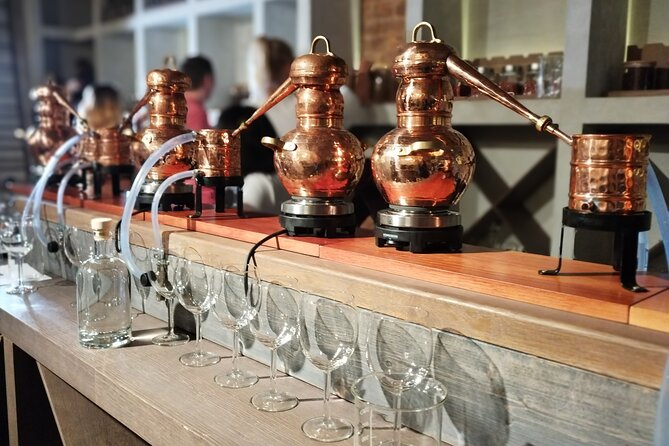
The production process is covered in detail, from distillation to bottling. That matters because most people only experience gin as a bottle on a shelf. In a real workshop setting, you get to see what changes inside the still, and you understand the logic behind those changes.
Here’s what you should expect your brain to do during this portion:
- Translate flavor into process. Botanicals are not just “added,” they are handled in a way that affects the final outcome.
- Learn the sequence. You get the story of what happens first, what happens next, and why that order is important.
- Pick up practical language. When you’re later making your own recipe, having even basic process vocabulary helps you make better choices quickly.
One balancing note: you are learning and participating at the same time. That means you won’t get a full day of lab technique. Instead, you get a focused guided version that supports you while you craft your own gin, which is the main goal.
Different day, same base in Riga:
- From Riga: Husky Sledding or Wheel Kart Tour★ 4.9 · 155 reviews
- From Riga: Hill of Crosses & Jelgava Highlights★ 5.0 · 149 reviews
- Riga Gun Range: shooting with Winchester, Glock17, & Kalashnikov★ 5.0 · 148 reviews
- Riga: Hill of Crosses, Guided Rundale Palace & Bauska Castle★ 4.9 · 140 reviews
- Riga Old Town Walking Tour in a Small Group★ 4.5 · 132 reviews
Tasting Dvoretsky family spirits: calibrate your palate first
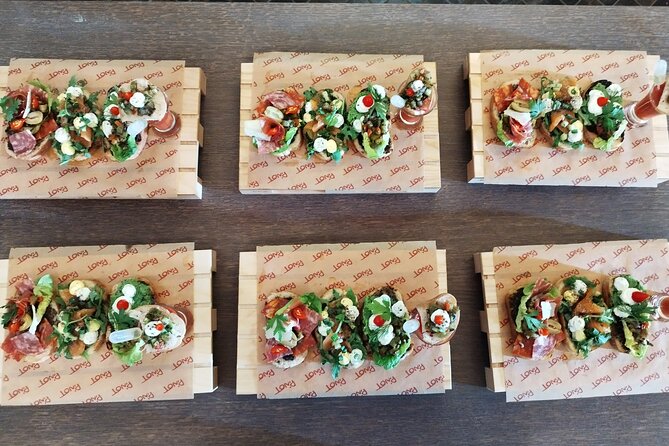
Before you start distilling your own gin, you enjoy a degustation of Dvoretsky family products. This tasting piece is more valuable than it sounds, because it gives you reference points.
I recommend you treat this like “training wheels” for your recipe decisions:
- Taste with intention. Pay attention to what you like right away, and also what feels too strong or too sharp.
- Note how flavors come across. Some botanicals can feel more herbal, others more citrusy or spiced. You’re looking for the direction you want your gin to go.
- Use it to guide your botanical selections. If you know you love a certain profile, you can steer your recipe toward it rather than guessing.
The fact that the tasting is tied to the same family products that the distillery is connected to helps keep the lesson grounded. You’re not tasting random gins from everywhere and then being asked to invent something with no reference. You’re tasting within the same gin world and learning from it.
Creating your own gin recipe with botanicals, in plain English
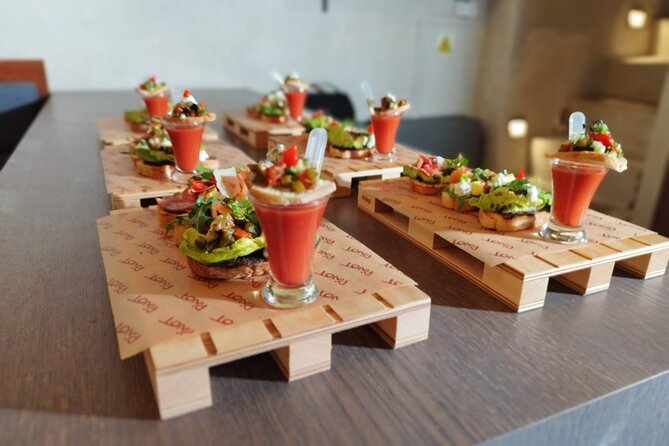
The heart of the experience is making your own gin based on your preferences. You also learn about diverse botanicals that flavor the spirit, and then you put that knowledge to work while building your recipe.
What this means for you in real terms is choice. You’re not just “making gin.” You’re selecting a style direction by selecting botanical combinations. The lesson guides you through history and production, but the recipe part is where you get ownership.
Here’s how I’d approach it if it were me:
- Start with your preferences, not your curiosity. Ask yourself what you want to taste more of: freshness, spice, herbal notes, or a warmer profile.
- Think in balance. A recipe usually works when no single note overwhelms the rest.
- Be decisive. In a two-hour class, you’ll want to make your choices early enough that you can enjoy tasting and distilling, not just planning.
This is also where the most praised aspect shows up. People love the chance to create their own recipe with botanicals and actually make it, not just watch the process. That hands-on part is what makes the experience feel personal.
Distilling your own gin: what to do during the hands-on portion
Your guided time culminates with distill your own gin. You become a distiller, while the instructors walk you through the production process details and keep you on track.
Because specific technical steps are not listed in the info I have, I won’t pretend you’ll be doing advanced engineering work. What I can say is that you are active in the process, and the workshop is designed around learning by doing.
A few practical pointers will help you get the most from it:
- Listen for the reasons behind each instruction. If you understand the goal of a step, you’re more likely to end up with a gin that matches your expectations.
- Keep your focus during mixing and distilling. You will likely be balancing tasting notes, recipe choices, and production steps in one session.
- If you’re new to gin, ask simple questions. You do not need to sound technical. Just ask what a botanical does to flavor.
The reviews associated with this experience highlight a host who makes the session smooth and enjoyable, and that matters here. In workshops, the best instructors are the ones who help you feel comfortable while you try something unfamiliar.
Facilities and host style: why the room matters
The setting is described as very nice premises in the feedback. That’s not a minor detail. A well-run lab or classroom space helps you feel like you are in a real craft environment, not just squeezed into a storefront.
The host is also praised as great, and that usually means two things in practice:
- You get clear guidance without feeling rushed or talked down to.
- You can ask questions as you build your recipe, rather than waiting until the end.
Since this is a private tour/activity, the vibe tends to stay focused on your group. That can be a big win if your group wants time to talk through preferences while others are not competing for attention.
Price and value for $114.98 per person
At $114.98 per person for about 2 hours, this is not a cheap tasting. But it is also not just a tasting. You are paying for instruction, tastings of Dvoretsky family products, and your own hands-on distilling and recipe creation.
So the value equation looks more like this:
- You’re buying a guided craft session, not a bar pour.
- You’re paying for learning and participation, not passive observation.
- You’re getting ingredient-level decisions through botanicals, which turns the experience into something you can remember and repeat in your own way later.
You also get group discounts, and that can make a real difference if you’re coming with friends who will actually use the experience. If you are a solo gin fan, you may still find it worth it because the hands-on focus is the point. If you’re looking only for a casual drink, you could be happier with a standard tasting in town. But if you want to understand how gin is built, this workshop pricing fits that goal.
One more value tip: book early if you can. The experience is often booked about 12 days in advance on average, and you want to avoid ending up with no spots in your preferred evening window.
Who should book Riga Gin Laboratory
I think this fits best if you match one of these profiles:
- You like gin and want to go past tasting into recipe thinking
- You enjoy hands-on activities and like learning by doing
- You want a Riga experience that is adult-focused and not just another walking tour
- You like structured guidance, but still want personal choice in the recipe
It may be less ideal if:
- You only have one evening free and it falls outside Monday to Friday 6:00 PM to 8:00 PM
- You want a long, slow session. This is about two hours, so it stays focused and time-efficient
- You are under 18. The experience is 18+ only
If you land in the first group, you’ll probably find the botanicals and distilling session the most satisfying part, because that’s where control and creativity meet real process learning.
Quick FAQ
FAQ
How long is the Riga Gin Laboratory experience?
It runs for about 2 hours.
What does the class include?
You learn the history and origins of gin, the production process details, enjoy a tasting of Dvoretsky family products, and distill your own gin.
Where do I meet for the tour?
The meeting point is Saulesgaisma, SIA, at Elizabetes iela 7, Centra rajons, Rīga, LV-1010, Latvia.
What time does it run?
The listed hours are Monday to Friday, 6:00 PM to 8:00 PM.
How much does it cost?
The price is $114.98 per person.
Is it private or shared?
It is a private tour/activity, with only your group participating.
Is there an age requirement?
Yes, you must be 18+.
Do I get a mobile ticket?
Yes, it is listed as a mobile ticket.
Should you book this gin master class?
If you like gin, want to understand botanicals, and enjoy making something with your own hands, this is an easy yes. The big payoff is the mix of tasting Dvoretsky family products, learning the production process, and then actually distilling your own gin based on preferences. That combination turns the experience from an evening activity into a skill you can take with you.
If you are more interested in a quick drink than in learning how gin is built, or if your schedule cannot handle a Monday to Friday 6:00 PM start, you might consider alternatives. But for the gin fan who wants the real workshop side, Riga Gin Laboratory is a strong value for your time and attention.
Newest entries out of Riga
- Riga Beer Bike
- Sunrise or sunset SUP/kayak Adventure in the bog from Riga
- Discover Riga’s most Photogenic Spots with a Local
- Small Group – Hill of Crosses, Jelgava and Jurmala / 2 Countries
- Day trip to Tallinn from Riga
- Riga City Tour and Panoramic Ride on the Riga Eye
- Private Chocolate Masterclass in Old Town of Riga
- Riga Exploration Game and City Tour on your Phone