
Reviewed · ART NOUVEAU WALKS
Riga’s Architecture: A self-guided audio tour of the city’s art nouveau history
Riga’s Art Nouveau feels personal. This self-guided audio architecture tour lets you explore Riga’s best examples at your own pace, with a story line that connects Mikhail Eisenstein to the wider rise of the style. Riga is often called a true Art Nouveau city, with over 800 buildings, including the world’s highest concentration of this architecture type.
What I like most is how the narration teaches you what to notice as you walk, so you’re not just passing pretty facades. You get practical guidance on how to identify Art Nouveau buildings, and the pace stays tight, about 30 to 45 minutes. A second win is the app setup, since you can download audio and maps for offline use, then keep moving without hunting for signal.
One consideration: you’ll need your own smartphone and headphones, and there are no included tickets or museum entry fees. So if you want to go inside buildings along the way, you may have extra costs or decide to keep it exterior-only.
In This Review
- Key highlights you should care about
- Why Riga’s Art Nouveau feels made for a self-guided walk
- Starting at Jaņa Rozentāla laukums: the museum step that sets the tone
- The short stop at Elizabetes 10b: a quick palate cleanser
- Alberta 2a and Alberta 4: learning by repetition
- Alberta 11 and Alberta 13: where the story gains personality
- The end at Alberta 12: putting it all together
- What the architecture narrative actually covers
- VoiceMap and offline audio: the practical tech that improves the experience
- Price and time: what $5.20 buys you
- How to get the most out of each stop without getting stuck
- Who should book this Riga Art Nouveau audio tour
- Should you book it?
- FAQ
- What is the duration of the Riga Architecture audio tour?
- How much does the tour cost?
- Where does the tour start and end?
- Do I need an internet connection during the walk?
- Are museum tickets or entrance fees included?
- Is there a refund if I cancel?
Key highlights you should care about
- VoiceMap offline access for audio, maps, and geodata, so you can walk without data
- A focused 30 to 45 minute route that hits multiple Art Nouveau addresses without dragging
- Real architectural storytelling, including Mikhail Eisenstein and his son Sergei
- A guided way to spot Art Nouveau, so you understand what you’re looking at
- National Romanticism context in Riga, explained through the city’s own design evolution
- A dense “Alberta” street run of key facades, ending at Alberta 12
More Art Nouveau streets to walk:


Why Riga’s Art Nouveau feels made for a self-guided walk
Riga is a great city for architecture spotting because the style is everywhere. With so many Art Nouveau buildings, you can actually learn patterns, not just see one landmark and move on. This matters, because the more you can connect one building to the next, the more the city starts to make sense.
This tour leans into that idea. It doesn’t try to cover the entire city, instead it gives you a short route that concentrates key examples and themes. You’ll walk away with a mental checklist for identifying the look, plus background on how architects shaped the city’s signature direction.
And because it’s self-guided, you can slow down when something catches your eye. If you want more time on one facade, you can give it extra minutes and let the narration catch up your pace. If you’re trying to fit this into a tight day, the short duration is a big deal.
Starting at Jaņa Rozentāla laukums: the museum step that sets the tone
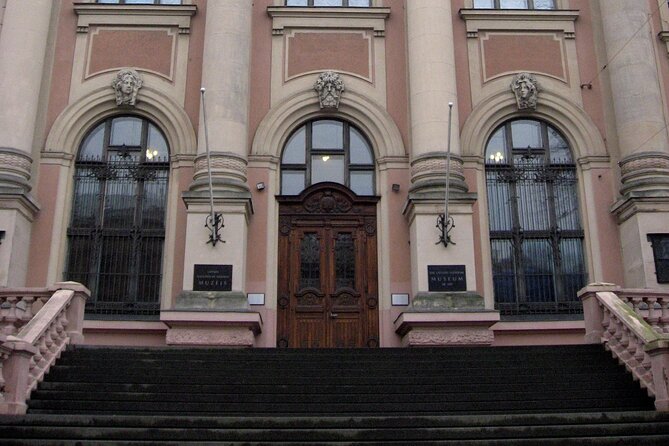
The walk begins at the Latvian National Museum of Art, Jaņa Rozentāla laukums 1. Starting at a museum is smart for two reasons. First, it puts you at an easy reference point before you start moving house to house. Second, it frames the whole route as architecture with a cultural story, not random sightseeing.
Once you arrive at the start point, the best approach is simple. Open the app, start the audio, and let it tell you what to look for before you’re staring at buildings you don’t yet understand. That early orientation helps the route click quickly, especially if you only have a short window.
The tour runs daily from 12:00 AM to 11:59 PM, which is unusual for a walking experience. In plain terms, you have flexibility, so you can match it to your day in Riga. Just remember that the city feels best when you’re not rushing the audio, since it’s doing the real work of teaching you how to read the facades.
The short stop at Elizabetes 10b: a quick palate cleanser
Right after the museum, you get a brief stop at Elizabetes 10b. This kind of short segment can feel like a tease, unless you know why it’s there. In tours like this, the first few addresses help you calibrate your eye, so later stops hit harder.
Use this moment to practice what the narration tells you to look for in Art Nouveau. Don’t worry about memorizing details. Focus on the big signals the audio highlights, then carry that skill forward.
A practical tip: if you’re using a smartphone outdoors, keep screen brightness up and download anything you need before you leave. Offline access is included, but your battery is still your responsibility.
Alberta 2a and Alberta 4: learning by repetition
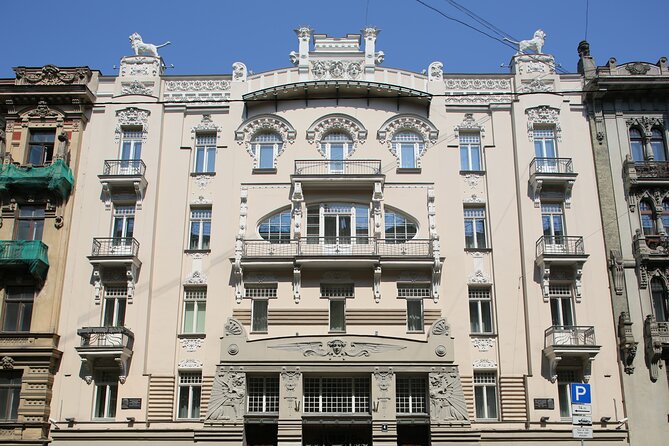
The route then moves to Alberta 2a and Alberta 4, again as brief stops. This is where repetition pays off. When you look at several nearby buildings in a short time window, you start seeing the logic behind the decoration and not just the decoration itself.
Even though each stop is short, the tour is building a layered understanding. You’ll be learning how Riga’s Art Nouveau expression connects to specific architects, and how certain design ideas evolve from one building to the next.
If you want this to work at maximum speed, do this: when the audio points to something, take one photo of the area it mentions, then move on. That keeps you engaged with the story instead of getting stuck trying to photograph the whole facade.
More history at street level in Riga:
- Riga Jewish History Tour★ 5.0 · 9 reviews
- Cesis: Medieval Heritage and Natural Treasures★ 4.0 · 4 reviews
- Cesis: Medieval heritage and natural treasures★ 5.0 · 2 reviews
Alberta 11 and Alberta 13: where the story gains personality
Next up are Alberta 11 and Alberta 13. This section tends to feel more rewarding because the narration has enough time to connect architecture to people, and people to history.
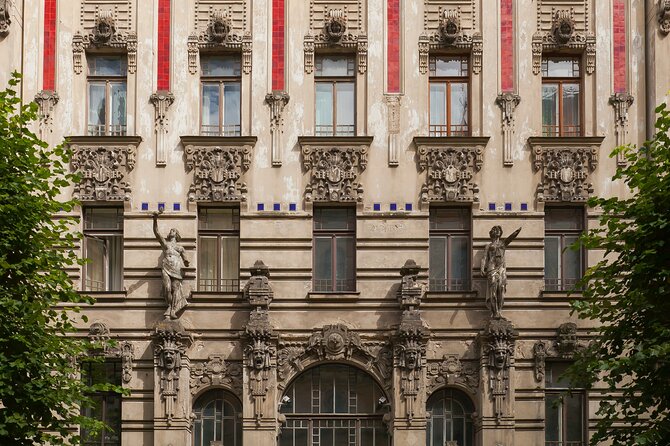
One of the most compelling threads is Mikhail Eisenstein, an architect tied to Riga’s Art Nouveau world. His son, Sergei Eisenstein, later became a legendary Soviet filmmaker. That family connection is exactly the kind of detail that makes a building feel less like a postcard and more like part of a bigger human timeline.
You don’t need to be an architecture expert for this to land. The tour is designed to teach you what you’re looking at while also giving you context for why those choices mattered.
The end at Alberta 12: putting it all together
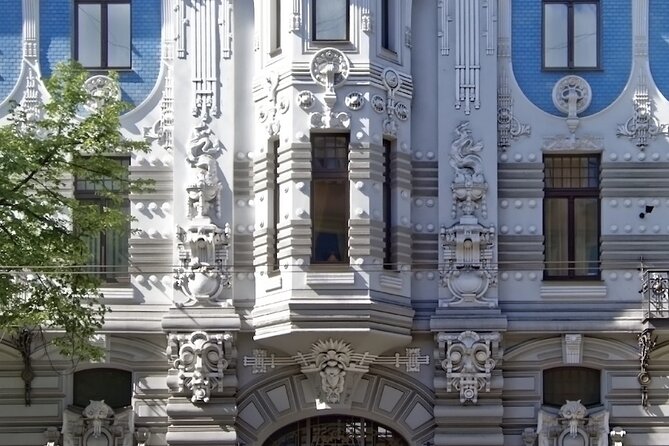
The tour ends at Alberta 12, completing the cluster of stops along Alberta Street. When you finish, you’re not just done walking. You’re done with one concentrated lesson in Riga’s Art Nouveau identity.
By the end of the route, you should feel more confident identifying the style. More importantly, you should understand that Riga’s Art Nouveau isn’t only decoration. It also reflects the city’s design evolution, including a move toward a Latvian-influenced style known as National Romanticism.
If you have extra time after Alberta 12, don’t over-plan. Just walk slowly in the same direction and see how often Art Nouveau appears. That’s the practical payoff of this type of tour: your eye learns, and the city keeps teaching you after the audio ends.
What the architecture narrative actually covers
This is not a generic “pretty buildings” audio tour. The narration is built around clear themes, and you’ll hear them as you move between addresses.
Here are the main ideas you should listen for as you go:
- How to identify an Art Nouveau building. The tour gives you the basic skill so you can recognize the style even when you’re not at a planned stop.
- The decorative work of Mikhail Eisenstein. The audio connects his architectural presence to Riga’s look and to a wider historical story.
- A courtyard moment inside a major residential building. At some point along the route, you’ll be directed to a courtyard of one of Riga’s impressive residential buildings, turning the walk from street-level viewing into something more three-dimensional in your imagination.
- National Romanticism in Riga. You’ll learn how architects developed a uniquely Latvian style, so the city’s Art Nouveau story includes local identity, not only imported trends.
What I found useful is that the tour avoids drowning you in details. It gives enough to make the buildings meaningful, then keeps you moving. That balance is a big reason many people enjoy self-guided tours like this when they don’t have time for a live guide.
VoiceMap and offline audio: the practical tech that improves the experience
This tour includes the VoiceMap app for Android and iOS, with offline access to audio, maps, and geodata. That feature matters in Riga because you might move through areas where your signal is inconsistent, and architecture walks reward steady pacing more than troubleshooting.
Offline access also changes your decision-making. You don’t need to plan your day around mobile data. You can download, set off, and focus on the buildings instead of checking connectivity.
You’ll also like that you get lifetime access to the tour in English. If you come back to Riga later, you can repeat the route and notice new things. That turns a short trip into a longer-term resource.
Finally, the app makes it easy to stick with the plan. The audio is doing the teaching, so you’re less likely to wander off track or end up in information overload.
Price and time: what $5.20 buys you
At $5.20 per person, this is priced like a budget-friendly architecture lesson. The real value comes from what’s included. You pay for the audio tour itself, and you get lifetime access plus offline materials through VoiceMap.
It’s also a short commitment. Expect about 30 to 45 minutes, which makes it a smart add-on to a day that already includes museums, meals, and longer walks. If your schedule is tight, this kind of time-efficient plan can be better value than booking a longer tour that eats up half a day.
What’s not included is equally important to understand. You’ll need:
- your own smartphone and headphones
- any transportation you use
- food and drink
- any museum or entrance tickets if you choose to go inside something en route
If you want only exterior viewing, that’s easy. If you plan to go inside multiple buildings, you’ll need to budget time and money separately.
How to get the most out of each stop without getting stuck
Even with a short route, you can make it better with a simple rhythm. Here’s a plan I’d use for this kind of Riga architecture walk:
- Start with the audio, not with photos. Let the narration tell you what matters first.
- At each stop, pick one detail area to focus on for 30 seconds, then move.
- If you want extra photos, take them after the audio segment ends, so you don’t lose the thread.
- Keep your pace steady. The route is designed for short pauses, not long re-reading.
This tour also works well if you’re not feeling “museum mode.” You can treat it like a guided walk with a history brain, but without feeling pinned down.
Who should book this Riga Art Nouveau audio tour
I think this tour fits best if you want to learn while walking, and you like independence. You’ll likely enjoy it if:
- you prefer a self-guided experience instead of waiting for a group
- you want Art Nouveau identification tips and clear context
- you need something that fits into a short window, since it’s 30 to 45 minutes
- you’ll appreciate offline audio and maps when you’re out exploring
It might be less ideal if you expect a long, in-depth lecture, or if you want entrances, tickets, and indoor stops as part of the plan. This is built around the city’s architecture you can see along the route.
Should you book it?
If you’re heading to Riga and want a fast, smart introduction to Art Nouveau, I’d book this. For the cost, you’re getting a short, structured route with offline technology and enough storytelling to make the buildings feel connected, not random.
Just be honest with yourself about the setup. Bring headphones, keep your phone charged, and plan on mostly exterior viewing. If you do those basics, you’ll leave with a better eye for Riga’s Art Nouveau and a story to attach to the facades as you wander afterward.
FAQ
What is the duration of the Riga Architecture audio tour?
It takes about 30 to 45 minutes.
How much does the tour cost?
The price is $5.20 per person.
Where does the tour start and end?
It starts at the Latvian National Museum of Art, Jaņa Rozentāla laukums 1, and ends at Alberta iela 12.
Do I need an internet connection during the walk?
No. Offline access to audio, maps, and geodata is included.
Are museum tickets or entrance fees included?
No. Tickets or entrance fees are not included.
Is there a refund if I cancel?
No. The experience is non-refundable and cannot be changed for any reason.
Routes to Start When It Suits
- Riga Self Guided Sherlock Holmes Mystery City Game★ 3.5 · 2 reviews
- Riga Old Town Highlights Self Guided Walking Tour★ 4.5 · 2 reviews
- Riga Exploration Game and City Tour on your Phone★ 4.0 · 1 review
More to Listen to as You Walk
- Riga Scavenger Hunt and Highlights Self Guided Audio Tour★ 5.0 · 11 reviews
- An audio tour of Old Riga: from St Peter’s Church to the Monument of Freedom★ 3.0 · 1 review
- Riga’s Old Town: An Audio Tour by a Professional Latvian Guide★ 5.0 · 1 review
Newest entries out of Riga
- Riga Beer Bike
- Sunrise or sunset SUP/kayak Adventure in the bog from Riga
- Create your own Gin at Riga Gin Laboratory
- Small Group – Hill of Crosses, Jelgava and Jurmala / 2 Countries
- Discover Riga’s most Photogenic Spots with a Local
- Riga City Tour and Panoramic Ride on the Riga Eye
- Private Chocolate Masterclass in Old Town of Riga
- Day trip to Tallinn from Riga
Art Nouveau Walks, compared.
Ultimate Art Nouveau Experience in Riga – Private Tour
Read our review →
Explore Riga’s Art Nouveau district with a Local
Read our review →
Riga Old Town, C Market & Art Nouveau Guided Walking Tour
Read our review →More Riga days like this