
Reviewed · RIGA
Discover Riga’s most Photogenic Spots with a Local
Riga looks best through a local lens. This 90-minute photo-focused walk is built for getting good angles and hearing why the city looks the way it does. You start in the Old Town area near Roland’s Statue and glide toward the Art Nouveau District, with plenty of stops made for cameras and street-level storytelling.
What I really like is the blend of big sights and less-obvious corners. You’ll get cultural context at places like the Gothic presidential residence and a cathedral mixing Romanesque, Gothic, and Baroque features, plus a route that keeps changing the look from stop to stop. I also love that your host shares practical recommendations for where to eat and drink after the walk, so your Riga day feels less like a checklist.
One heads-up: this is walking time, and it’s not recommended for guests with impaired mobility. Also, weather can shift the order or specific stops, so if you need a very fixed route for timing, plan some flexibility.
In This Review
- Key things that make this Riga photo tour worth it
- Kickoff at Roland’s Statue, then plan your photos like a local
- President’s Gothic residence: first stop, instant mood
- A 15th-century church with one of Europe’s tallest steeples
- A cathedral blend of Romanesque, Gothic, and Baroque forms
- Big Christopher and riverside vistas that feel like a postcard
- Three Brothers: Riga’s oldest residential complex from the 15th century
- Art Nouveau District: turn architecture into your photo theme
- Golden domes at a renovated 19th-century Orthodox cathedral
- Neo-classical opera house finale by park and canal
- How the 90 minutes are paced, and what to expect on the move
- Price and value: is $103.56 fair for a Riga photo tour?
- Who this tour suits best (and who should consider another option)
- Should you book this Riga photo-walk with a local?
- FAQ
- How long is the Riga photogenic spots tour?
- What is the group size?
- Where do I meet, and where does the tour end?
- What is included in the price?
- What is not included?
- Is there free cancellation?
- Are service animals allowed?
Key things that make this Riga photo tour worth it
- Small group of up to 8 means the local can adjust pace and photo stops for your questions.
- Photo-ready pacing across Old Town, canals, and architecture, so you get variety fast.
- A guide-led mix of landmarks and stories, from the Three Brothers to the tale behind Big Christopher.
- Local food and bar recommendations after the walk, so you know where to go next.
- Mobile ticket and public-transport proximity, helpful for easy start and finish.
Others that keep coming up around Riga:

Kickoff at Roland’s Statue, then plan your photos like a local
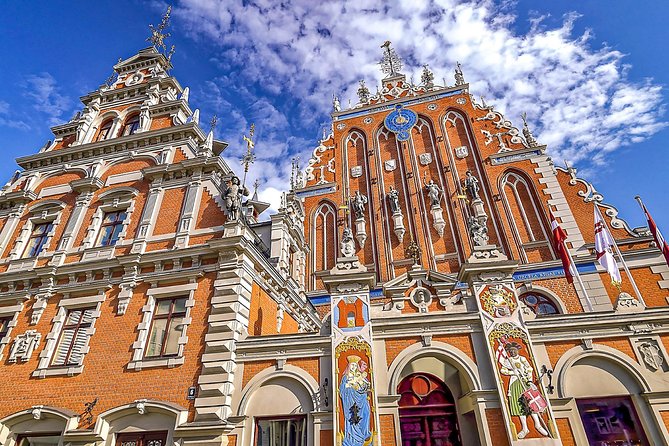
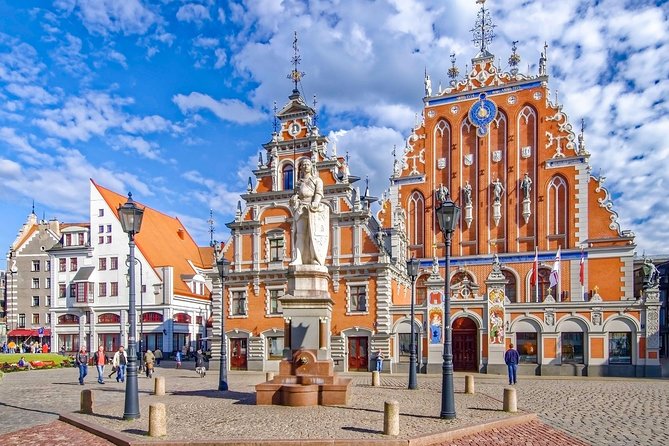
The tour starts at Roland’s Statue in Rātslaukums, a handy central spot that makes it easy to orient yourself. From minute one, your host is thinking about how you’ll see Riga, not just what you’ll see. That matters because Riga’s beauty is often in details, height, and contrast: brick against pale stone, ornate facades next to calmer side streets, and canals that turn an ordinary viewpoint into a real frame.
The group size, max 8 people, is a quiet advantage. You’re not fighting for position at each corner. If you need an extra minute for a shot, or you want help spotting a better angle, the host can usually make it happen. Your route also adapts to your interests and walking pace, which is a nice way to avoid the feeling of being rushed through the “must-sees.”
It’s also hosted by an independent local, and that shows in how the city is explained. Instead of only dates and names, you get the why behind the views, plus tips on what to notice so your photos look intentional.
President’s Gothic residence: first stop, instant mood
Your first major cultural stop is the Gothic-style residence of Latvia’s President, a building tied to national pride and history. It’s a smart opening because it sets a tone fast: Riga here is not just a pretty city, it’s a place with identity you can see in the architecture.
For your photos, start by taking in the whole facade first, then come back for the smaller elements. Gothic buildings tend to reward close looking, like repeating shapes and the way the building’s lines pull your eye upward. Even if you only have a few minutes here, you’ll leave with at least one strong “opening shot” that works as a reference photo for your whole day.
This stop also gives you a quick cultural anchor before the older medieval and church-heavy parts of the walk. When you understand what the city values, the rest of the architecture becomes easier to read in your camera.
A 15th-century church with one of Europe’s tallest steeples
Next comes a medieval church dating to the 15th century, famous for one of Europe’s tallest steeples. That kind of height changes everything. From street level, you’ll want to shoot upward, and you’ll also want to find an angle where the steeple isn’t just a blur against the sky.
This is where your host’s local knowledge helps most. Rather than telling you to point your camera higher, they guide you toward a viewpoint that lets the steeple sit in context with the building and the street. Those wider frames often look more “Riga” than a tight crop.
The drawback to keep in mind: tall towers can make photos trickier when the sky is bright or cloudy. If the light turns flat, you’ll still get good photos, but lean on composition, like leading lines and the way nearby rooftops frame the vertical shape.
A cathedral blend of Romanesque, Gothic, and Baroque forms
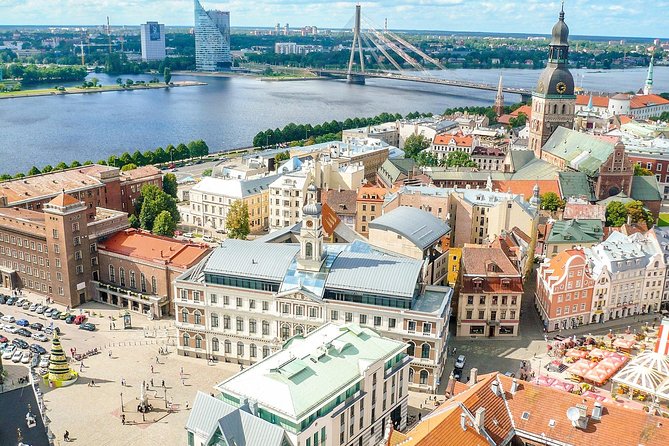
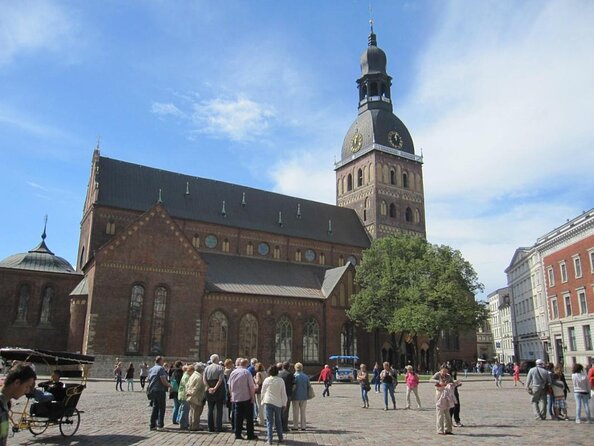
Then you move to a cathedral where Romanesque, Gothic, and Baroque architecture meet in one place, in a striking setting. I love this kind of stop because it gives you a visual story in one building. You can photograph it like three different eras happening at once, even if you’re only there for a short time.
How to work it for photos:
- Get one wide shot that shows the full setting.
- Then switch to “texture mode,” focusing on transitions between styles.
- Finally, look for symmetry or repeating patterns that help your camera capture the building’s structure.
This is also a great moment to slow down for the cultural explanation. When you know what you’re looking at, your photos stop looking like random landmarks and start looking like a theme: Riga’s layered past.
Different day, same base in Riga:
- From Riga: Husky Sledding or Wheel Kart Tour★ 4.9 · 155 reviews
- From Riga: Hill of Crosses & Jelgava Highlights★ 5.0 · 149 reviews
- Riga Gun Range: shooting with Winchester, Glock17, & Kalashnikov★ 5.0 · 148 reviews
- Riga: Hill of Crosses, Guided Rundale Palace & Bauska Castle★ 4.9 · 140 reviews
- Riga Old Town Walking Tour in a Small Group★ 4.5 · 132 reviews
Big Christopher and riverside vistas that feel like a postcard
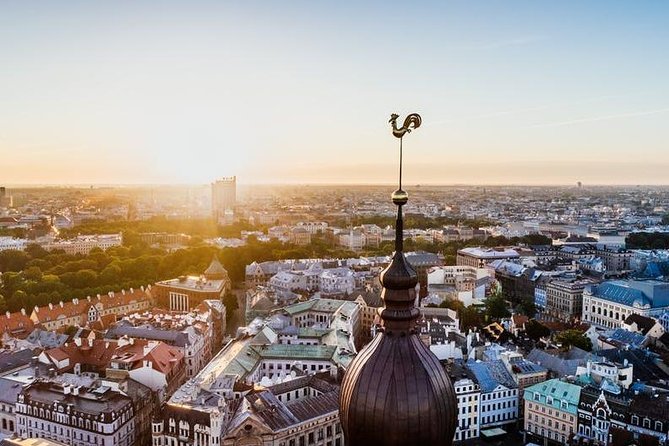
After the church and cathedral stops, you’ll uncover the tale of Big Christopher and capture riverside vistas at this legendary spot. Stories like this are why a local host adds value. You don’t just get a name, you get meaning, and that changes how you stand in front of the scene.
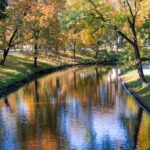
Riverside views tend to be forgiving for photography. Even if the light is not perfect, water reflects colors and shapes, and Riga’s canals give you a natural sense of depth. For the best look, try shooting from a slightly higher viewpoint if you can, then come back lower for the reflection.
This stop also breaks up the architecture-heavy flow. It gives you breathing room, and it helps your final photos feel varied rather than all facades and stone.
Three Brothers: Riga’s oldest residential complex from the 15th century
Then it’s time for the Three Brothers, Riga’s oldest residential complex from the 15th century. This is one of those places where the buildings themselves do most of the work. The facades have that classic Old Town character, and they’re a clear subject for photos whether you shoot straight-on or from a slight angle.
What makes this stop special is the way it ties the city’s present look to its older residential past. When you learn that these are 15th-century homes, you start noticing how Riga keeps reusing space and shape over time, not just building new things.
Photo tip: don’t just photograph the whole group once. Take one wider shot to show the complex together, then add a close shot for surface details. You’ll end up with more usable images when you’re editing later.
Art Nouveau District: turn architecture into your photo theme
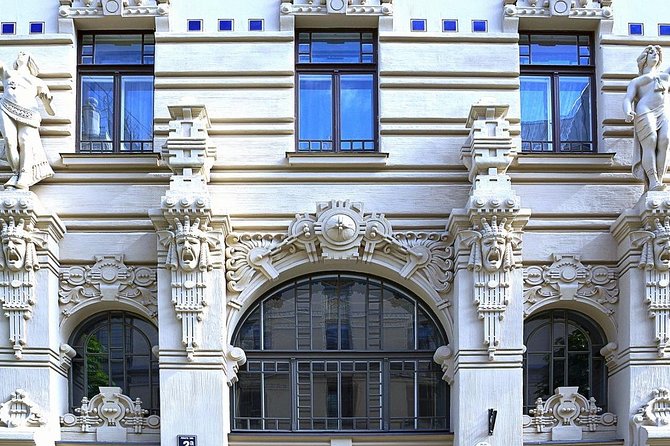
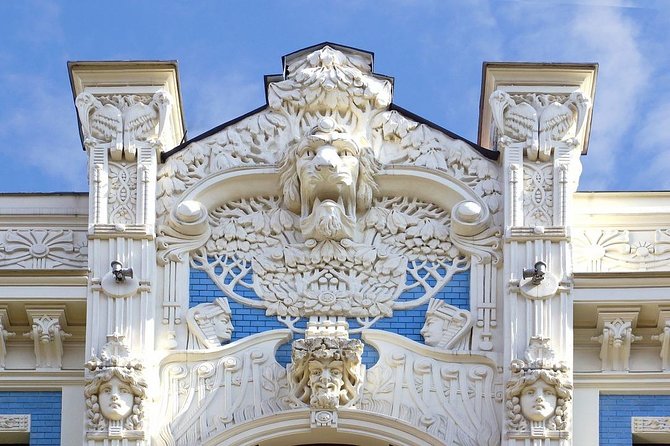
The walk then moves into the Art Nouveau district, described as a magical journey through architectural splendor. I’m a fan of this kind of segment because it turns the photo tour into a style tour. Your camera gets a clear direction: textures, ornaments, and facade drama.
Art Nouveau can look busy if you’re not sure what to focus on, so this is where your host’s guidance matters. You’ll likely be pointed toward the elements that make the style recognizable at a glance, like decorative curves and facade details that look almost sculpted.
This is also the right time to slow your pace a touch and shoot with intention. Take a few shots from the street, then step back and try framing the building within the surrounding streetscape. Riga’s charm is often the contrast between ornate facades and the calmer neighboring streets.
Golden domes at a renovated 19th-century Orthodox cathedral
Next, you’ll marvel at a renovated 19th-century Orthodox cathedral with striking golden domes. This is the kind of stop that instantly changes your color palette. Even if you don’t do anything special, gold domes tend to stand out against Riga’s cooler tones.
For photos, treat this as a light-dependent location. If the day is bright, golden domes can turn into a high-glare problem. If the light is softer, they may show richer color and detail. Either way, aim for at least two angles: one that shows the dome shape clearly, and another that includes part of the surrounding building to give context.
This stop also adds variety to the architectural timeline you’ve been seeing. Earlier you had Gothic and mixed-style church elements. Now you get a different religious aesthetic and a different scale of visual impact.
Neo-classical opera house finale by park and canal
The tour ends at the Latvian National Opera on Aspazijas bulvāris 3, set against a lush park and canal. Even as the final stop, it works well because it gives you space to breathe and time to get a strong “closing photo.”
Neo-classical architecture usually rewards clean lines and symmetry. If your photos so far have been ornate and story-driven, this final stop can act like a visual exhale: structured, elegant, and easy to compose. The park and canal background also give you a natural buffer, so your shots look less cramped even if it’s a busy day outside.
If you want a simple strategy: shoot the building once as a full-frame subject, then take a second shot that includes the water or greenery. That helps your album feel like a journey, not a set of unrelated stops.
How the 90 minutes are paced, and what to expect on the move
This is a 90-minute walk, approximate, with an emphasis on seeing the city through someone who calls it home. The pace matters. You’re likely spending enough time at each highlight to get a few photos and hear the story behind it, but not so long that you feel stuck.
Your host adapts to your interests and walking pace, and stops may vary depending on weather conditions. That flexibility is helpful in Riga, where you can get sudden changes in light and rain. The trade-off is that you might not see every viewpoint in the exact same order every day, but the core highlights stay the same.
The tour is also designed for a small group, so you’re not waiting around for a crowd. That makes it feel more like a guided wander than a rigid sightseeing program.
Price and value: is $103.56 fair for a Riga photo tour?
At $103.56 per person for about 1.5 hours, the value comes from what’s included, not just the route. You’re paying for a knowledgeable local, a small group experience, and personalized recommendations. That means your time is shaped by a host who can point out what matters for photos and share where to go next for food and drinks.
What helps the price make sense:
- The stops include multiple major architectural styles and iconic photo subjects, from Three Brothers and Art Nouveau streets to golden domes and the opera house.
- The max 8 travelers size improves the quality of the guidance, especially for photo angles.
- You get practical local tips, which can save you time when you’re deciding where to eat that evening.
What could add extra cost:
- Public transportation, museums, and monument entry tickets are not included.
- Personal expenses are not included.
- If you want to go inside any paid sights later, you’ll pay separately.
If you’re the type who wants to get your bearings fast and leave with usable photos and local leads for dinner, this price feels more like a day-plan assistant than just a walk-and-point tour.
Who this tour suits best (and who should consider another option)
This works well for:
- First-time Riga visitors who want a focused route and stories that make architecture easier to understand.
- Photo lovers who want help choosing angles and prioritizing the most photogenic stops.
- Travelers who like small-group attention, not big-bus crowd time.
- People who want local recommendations for bars, cafes, and restaurants for after the walk.
It may not be the best fit if:
- You have mobility limitations. The tour is not recommended for guests with impaired mobility.
- You need a completely fixed, guaranteed sequence of stops regardless of weather, since it can adapt.
Most travelers can participate, and the meeting area is near public transportation, which helps you fit the start into your day smoothly.
Should you book this Riga photo-walk with a local?
I’d book it if you want Riga to feel like a story you can photograph, not a list you can cross off. The small group size, the local-led guidance, and the combination of iconic architecture with river views add up to a high return on time.
Skip it if walking is a struggle for you, or if you prefer self-guided exploring where you set every stop and timing yourself. Also, if you want paid museum time included, you’ll need to plan those separately since entry tickets are not included.
For most people who like good photos and better context, this is an efficient, friendly way to get your best Riga frames while learning how a local sees the city.
FAQ
How long is the Riga photogenic spots tour?
It runs about 1 hour 30 minutes.
What is the group size?
It is a small group with a maximum of 8 travelers.
Where do I meet, and where does the tour end?
You meet at Roland’s Statue in Rātslaukums. The tour ends at the Latvian National Opera on Aspazijas bulvāris 3.
What is included in the price?
A knowledgeable local, the small group experience, and personalized recommendations are included.
What is not included?
Personal expenses are not included, and entry tickets for public transportation, museums, and monuments are not included.
Is there free cancellation?
Yes. You can cancel for a full refund up to 24 hours before the experience starts.
Are service animals allowed?
Yes, service animals are allowed on this tour.
Newest entries out of Riga
- Riga Beer Bike
- Sunrise or sunset SUP/kayak Adventure in the bog from Riga
- Create your own Gin at Riga Gin Laboratory
- Small Group – Hill of Crosses, Jelgava and Jurmala / 2 Countries
- Private Chocolate Masterclass in Old Town of Riga
- Day trip to Tallinn from Riga
- Riga City Tour and Panoramic Ride on the Riga Eye
- Arrival Private Transfer from Riga Airport RIX to Riga City by Minivan