
Reviewed · CITY TOURS
Riga Exploration Game and City Tour on your Phone
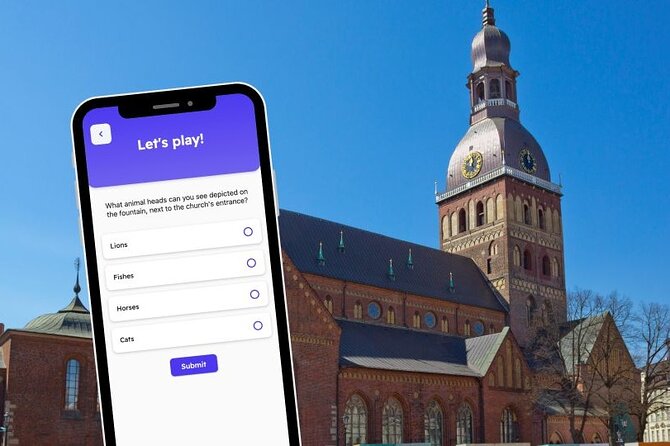
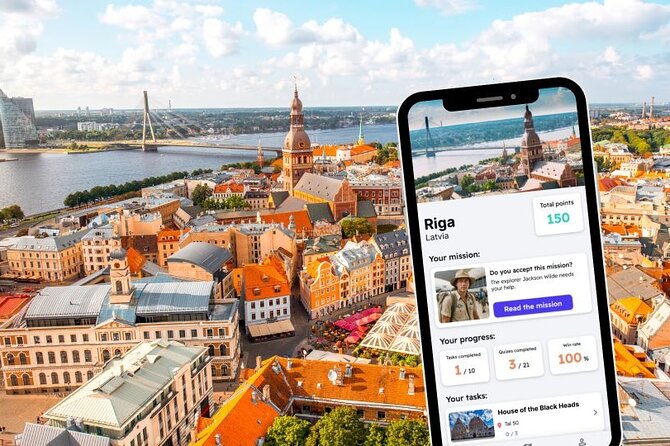
Riga turns into a game you play. This phone tour is a smart way to see the city at your speed, using quizzes and short guides that pop up as you reach each monument. You start in Riga Town Hall Square and work your way through medieval civic power, merchant-era buildings, and standout sights tied to independence and Art Nouveau.
I especially like two things. First, it is self-guided, so you do not have to match your pace to a group or wait on anyone else. Second, the quiz format makes you actually look at what is in front of you, not just walk past it. The one drawback is that the game lets you change answers when you get things wrong, so it feels more like learning on the spot than strict testing.
In This Review
- Key highlights before you start
- Why a phone game works so well in Riga Town Hall Square
- Starting at Riga Town Hall Square, the civic anchor
- House of the Black Heads and Riga Cathedral, merchant faith and power
- Three Brothers and the Swedish Gate, old homes and old defenses
- Cat House and Albert Street, Art Nouveau with a backstory
- Freedom Monument and Nativity of Christ Cathedral, independence and faith side by side
- How the quizzes and phone prompts feel in real life
- Price, timing, and value for 1 to 2 hours
- Who should book this Riga exploration game
- Quick practical tips before you go
- Should you book Riga Exploration Game and City Tour on your phone?
- FAQ
- Where does the Riga Exploration Game and City Tour start?
- How long is the phone tour?
- How much does the tour cost?
- What language options are available?
- Is this tour guided by a person?
- What monuments are included in the route?
- Are admissions included for all stops?
- Do I need an app?
- Is the tour private?
- What are the opening hours for starting this activity?
- Can I cancel for free?
Key highlights before you start
- Private and phone-based: your group only, no need for a personal guide.
- Quizzes plus short guides: quick context for each stop as you walk.
- Art Nouveau focus: Cat House and Albert Street anchor this theme.
- A mix of free and ticketed sites: several stops are free to enter, some are not included.
- Old-town fortifications and power: Swedish Gate and the Town Hall tell two different stories of Riga.
- Flexible timing: it runs all day in the hours listed for the full period shown.
Routes to start when it suits you:



Why a phone game works so well in Riga Town Hall Square
If you like the feeling of getting oriented fast, a scavenger-style route is a great fit for Riga’s old center. You are not just moving from sign to sign. You are answering little questions and reading small guide notes that land right when you need them.
This particular format also helps you travel lighter, mentally. Instead of trying to memorize a lecture, you tap through prompts when you stand at the landmark itself. That keeps attention on details that you might otherwise miss, like the medieval civic role of the Town Hall or how later eras expressed identity through monuments and architecture.
And because it is accessible on Android and iOS apps or in a browser, you can decide what feels easiest with your own phone habits. You do not need to find a guide face or worry about where someone is standing. You just start at the agreed spot and let the game do the walking order.
Starting at Riga Town Hall Square, the civic anchor
Your route begins at Riga Town Hall Square, a place tied to civic administration and governance. The Riga Town Hall dates to the early 14th century and originally served as the city’s seat of the council and municipal offices.
This start matters because it sets the tone for what you are about to see. Riga is full of buildings that look pretty from the outside, but this one is about power and decision-making. If you take a minute to really notice the setting before you move on, the rest of the stops will feel more connected.
Good news for budgeting and planning: the Town Hall stop is listed as free entry, and it is only about a 10-minute window in the flow of the game. That makes it easy to start without feeling like you must commit to a long visit right away.
House of the Black Heads and Riga Cathedral, merchant faith and power
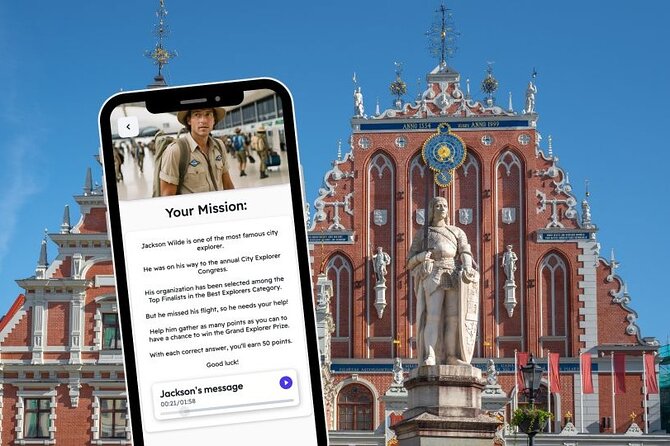
Next up is the House of the Black Heads. The original building dates to the early 14th century and began as a meeting place for a guild of unmarried merchants, shipowners, and foreigners in Riga. The Brotherhood of Blackheads is named after St. Mauritius, and that detail helps you understand the building as something more than a pretty facade. It was a social and professional hub tied to trade and community.
From there, the game takes you to Riga Cathedral, founded in 1211 during Riga’s early development as a major trading city within the Hanseatic League. The cathedral’s role here is clear: it was central to spreading Christianity and shaping Riga’s religious and cultural identity.
Two practical notes. First, both of these stops are marked as admission ticket not included. That does not mean you cannot visit, but it does mean you should be ready for the possibility of paying entry on-site. Second, both stops work best if you keep your pace steady. They are each slotted for about 10 minutes, so you will get more out of them if you skim the game prompts first, then use your reading time on location.
Three Brothers and the Swedish Gate, old homes and old defenses
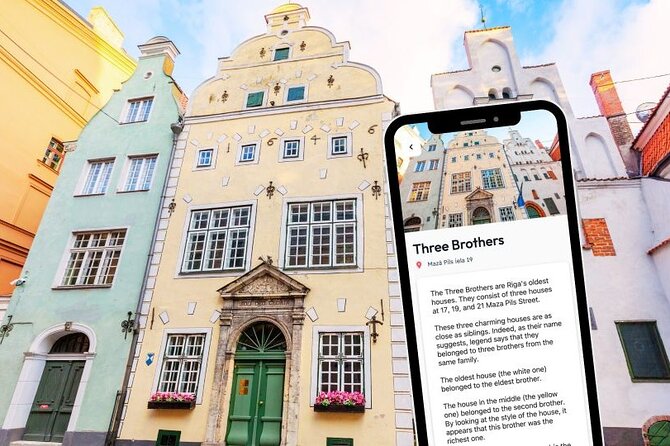
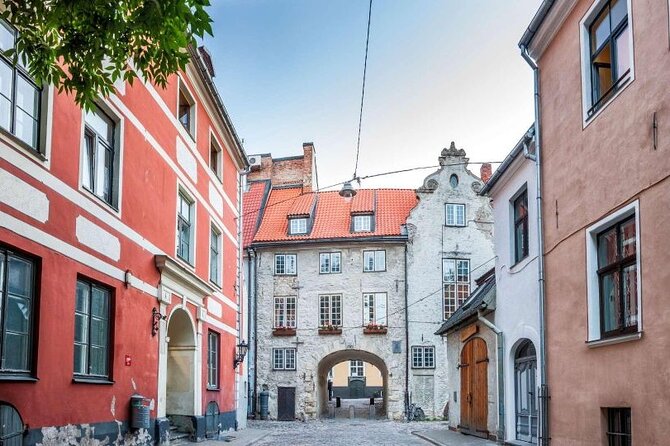
The Three Brothers are next, described as the oldest residential buildings in Riga and among the oldest in Latvia. They were built in different periods between the 15th and 17th centuries, and each house reflects a stage in Riga’s urban and architectural evolution, from Gothic to Renaissance and Baroque influences.
That is exactly the kind of detail that makes a self-guided quiz route work. If you only look at one building, you miss the idea of change over time. Here, you get the sense that Riga’s city fabric grew in chapters, not all at once. And because the stop is tied to the Latvian Museum of Architecture, it is likely a point where the game nudges you to notice features you might otherwise overlook.
Admission for the Three Brothers is listed as not included, so again, plan for possible on-site entry. The stop is about 15 minutes, which gives you enough time to take in what makes each brother distinct, rather than just snapping photos and moving on.
Then the route shifts to the Swedish Gate (Zviedru Varti), one of the few remaining gates from Riga’s old city fortifications. Built in 1698 as part of the defensive walls during the Swedish rule in the late 17th century, it turns the walk into a lesson about borders and protection.
This stop is listed as admission ticket free and about 15 minutes. If you want to feel the difference between medieval civic buildings and later defensive structures, this is where you will notice it. It is also a nice breather in the route because it is simpler to connect the exterior structure to a historical purpose: it was a gate, built to control movement.
More of Riga in a single loop:
- Private Boat Tour experience in Riga (City Canal and Daugava)★ 5.0 · 34 reviews
- Best of Latvia, Jurmala, Kemeri N Park, Kuldiga City, Food & More★ 5.0 · 34 reviews
- Panorama Riga top view of Riga City★ 4.5 · 23 reviews
- Private grand Riga city tour★ 5.0 · 13 reviews
- Riga City Canal & Daugava River Premium Boat Tour with Audioguide★ 4.0 · 8 reviews
Cat House and Albert Street, Art Nouveau with a backstory
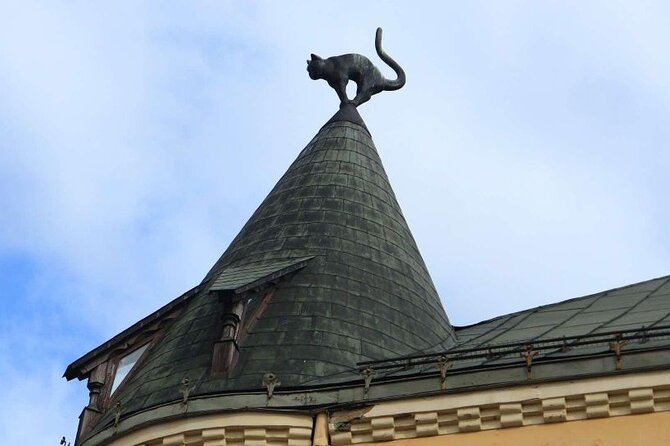
Now the game turns to one of the most human stories on the route: the Cat House. Built in 1909 by a wealthy Latvian merchant, it was designed as a protest against exclusion from the Great Guild, which was described as a powerful association of German merchants. The architect named here is Friedrich Scheffel, and the building is in Art Nouveau style, the popular taste of the time.
It is hard not to like this stop because it gives you a cause, not just a style. When you look at it through the lens of protest and belonging, Art Nouveau stops feeling like decoration and starts feeling like identity, even argument, made visible in brick and design.
Admission for the Cat House is listed as not included, and the stop is about 15 minutes. I recommend you treat this as your time to slow down. The building’s story is the point. If you only skim it, you miss what makes it memorable.
Then you end this Art Nouveau thread on Alberta Street (Albert Street), known for a concentration of Art Nouveau buildings. The description ties it to Riga’s rapid urban expansion in the late 19th and early 20th centuries, exactly when Art Nouveau was fashionable.
This stop is listed as admission ticket free and about 15 minutes, which makes it an easy payoff at the end of the walk. Also, there is a practical learning moment here: the game includes this as a specific step about Art Nouveau buildings on Albert Street, and it is still noted as up to date. So you are not relying on an outdated answer check. You can trust that the route is still aligned with the street you are standing on.
Freedom Monument and Nativity of Christ Cathedral, independence and faith side by side
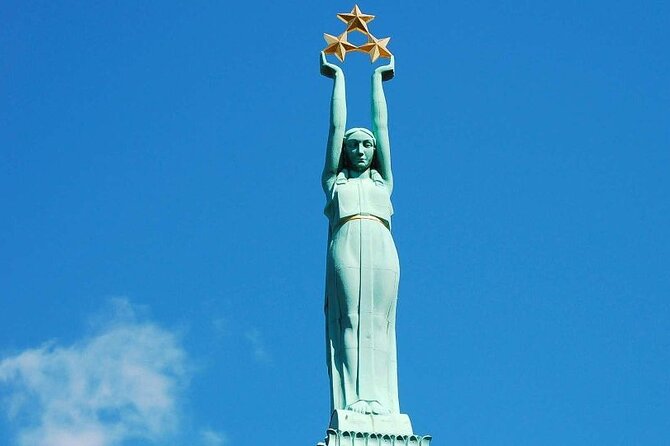
After the Art Nouveau stops, the tone becomes more solemn at the Freedom Monument. It was unveiled on November 18, 1935, to commemorate the 17th anniversary of Latvia’s independence from foreign rule, achieved in 1918.
That timeline matters. The monument is not just a general statement. It is tied to a specific anniversary and a specific political meaning. If you like monuments that explain identity, this is the stop that likely gives you the biggest emotional context in the route.
The Freedom Monument stop is listed as admission ticket free and about 15 minutes. That makes it a strong option even if you are keeping the whole experience closer to one hour.
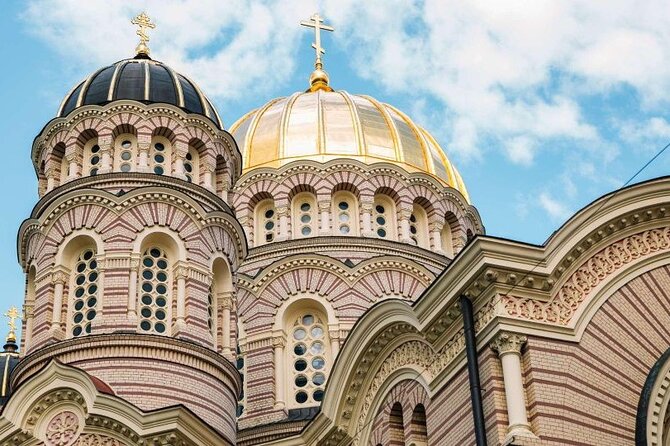
Next is the Nativity of Christ Cathedral, built between 1876 and 1883. It is described as the main Orthodox cathedral in Riga and one of the largest Orthodox churches in the Baltic States.
Like the Freedom Monument, this stop is listed as admission ticket free and about 15 minutes. If you are balancing your time, this is a good combination: it gives you political identity and religious presence without asking you to add paid entry time at the last minute.
How the quizzes and phone prompts feel in real life
The biggest reason this format works is that it mixes movement with micro-learning. At each monument, you get a quiz and guide info that helps you notice what you are looking at. It is not a long audio lecture. It is quick, targeted prompts meant for the exact spot on your route.
I also think it is a good choice if you do not want a constant back-and-forth with a human guide. Some people love guided tours for the conversation, but if you prefer to read and explore quietly, a phone game keeps the pace under your control.
One thing to consider is how the scoring feels. There is a built-in ability to change answers when you get them wrong. That can be good because it lets you correct your understanding as you go. It also means the experience is less about being graded and more about practicing observation.
Language options are another practical plus. The tour is offered in English, French, German, and Spanish, so you can pick the language that feels easiest while you are on the move. If you have ever struggled with translations that are technically correct but not easy to follow while walking, this matters.
Price, timing, and value for 1 to 2 hours
At $9.67 per person for a 1 to 2 hour experience, the value depends on what you enjoy. If you like self-paced sightseeing and you want a route with built-in context, this price is pretty reasonable because it includes the mobile ticket, quizzes, and guides.
If you need someone to manage every step, explain everything verbally, or hold your hand at each site, this is not that kind of tour. It is an activity you access on your phone. The data is very clear that it is not set up as a personal guide experience.
Timing-wise, the stop schedule is tight but not frantic. Many stops are about 10 minutes, while several land at around 15. That is a good shape for a one-hour outing if you move steadily, or closer to two hours if you pause to read the prompts carefully.
Also, the route ends back at the meeting point, Riga Town Hall Square. That is helpful for planning because it gives you a clear finish. You are not stuck figuring out how to get yourself out of the old town once you are done.
Who should book this Riga exploration game
You will probably love this if you:
- enjoy learning while walking, through quizzes and short guide notes
- want a self-guided route instead of coordinating with a group
- like seeing contrasts, medieval civic buildings, merchant-era guild ties, and later Art Nouveau and independence monuments
It might feel less ideal if you:
- prefer a live guide and question-and-answer conversation
- want strict quiz scoring, because the game is designed to be correctable rather than punishing
- do not want to deal with possible paid entry at stops marked as admission ticket not included
If you are traveling as a couple or small group, the private setup is a plus because it stays limited to your party. You avoid the awkwardness of having to share attention with strangers while you read prompts off your phone.
Quick practical tips before you go
Keep it simple and make the game do the heavy lifting:
- Charge your phone or make sure you have enough battery before you start.
- Start at Riga Town Hall Square and give yourself a couple minutes there to settle in.
- For ticketed stops, keep in mind that some admissions are listed as not included, so plan to handle any entry process on-site.
- If the day is busy, aim for steady progress. The stops are designed as a sequence, so skipping around can make the prompts feel less helpful.
Should you book Riga Exploration Game and City Tour on your phone?
Yes, I think it is a smart book if you want an easy, educational way to cover a compact set of Riga highlights in about an hour to two. The value comes from the built-in quizzes and guide notes, plus the fact that you control the pace.
I would skip it only if you strongly prefer a live guide experience or if you dislike any possibility of paid entry at certain stops marked as not included. For everyone else, this is a practical way to connect the city’s stories, merchants and faith, defenses and identity, to the places you are standing in front of.
FAQ
Where does the Riga Exploration Game and City Tour start?
It starts at Riga Town Hall Square (Kaļķu iela, Centra rajons, Rīga, LV-1050, Latvia).
How long is the phone tour?
It takes about 1 to 2 hours.
How much does the tour cost?
The price is $9.67 per person.
What language options are available?
The activity is available in English, French, German, and Spanish.
Is this tour guided by a person?
No. It is accessible on your smartphone, so it does not include a personal guide.
What monuments are included in the route?
The stops include Riga Town Hall Square, House of the Black Heads, Riga Cathedral, Three Brothers (Latvian Museum of Architecture), Swedish Gate (Zviedru Varti), Cat House, Freedom Monument, Nativity of Christ Cathedral, and Albert Street.
Are admissions included for all stops?
No. Some stops are listed as admission ticket free (such as Riga Town Hall Square, Swedish Gate, Freedom Monument, Nativity of Christ Cathedral, and Albert Street), while others are listed as admission ticket not included.
Do I need an app?
You can access the tour through Android and iOS apps or by using your browser.
Is the tour private?
Yes. It is private, meaning only your group participates.
What are the opening hours for starting this activity?
The listed opening hours are Monday to Sunday, 12:00 AM to 11:30 PM during the date range shown.
Can I cancel for free?
Yes, free cancellation is available up to 24 hours in advance for a full refund.
Newest entries out of Riga
- Riga Beer Bike
- Sunrise or sunset SUP/kayak Adventure in the bog from Riga
- Create your own Gin at Riga Gin Laboratory
- Small Group – Hill of Crosses, Jelgava and Jurmala / 2 Countries
- Discover Riga’s most Photogenic Spots with a Local
- Riga City Tour and Panoramic Ride on the Riga Eye
- Private Chocolate Masterclass in Old Town of Riga
- Day trip to Tallinn from Riga
City Tours, compared.

Best of Latvia, Jurmala, Kemeri N Park, Kuldiga City, Food & More
Read our review →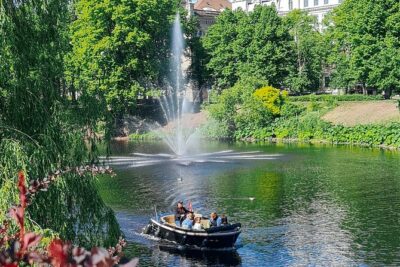
Private Boat Tour experience in Riga (City Canal and Daugava)
Read our review →
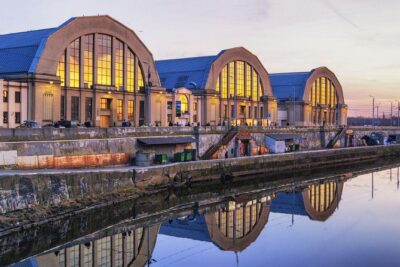
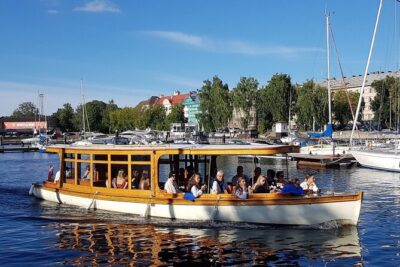
Riga City Canal & Daugava River Premium Boat Tour with Audioguide
Read our review →

CITY QUEST RIGA: unlock the mysteries of this city!
Read our review →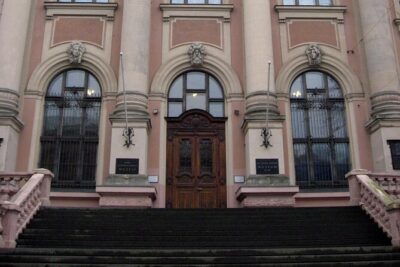
Riga’s Architecture: A self-guided audio tour of the city’s art nouveau history
Read our review →More Riga days like this