Reviewed · TOURS
Riga Jewish History Tour
Riga gets heavy fast. This private tour gives you clear context for what happened, plus striking stops tied to Riga’s Jewish community and its aftermath. I especially like the Art Nouveau angle, seeing how Jewish lives and ideas left marks on the city’s streets. I also like the pacing, with time to stand at memorials and absorb what you are looking at. One note up front, this is a somber route, so plan for an emotionally heavy few hours, not casual sightseeing.
You’ll start with architecture and end with reflection, and the guide can answer your questions as you go. The tour also works as a focused “feel the place” experience, because you are not just reading facts, you are walking the same urban space where those stories unfolded. With Armands Latvia Guide leading, the tone stays respectful and the explanations stay practical.
A possible drawback is that parts of the route involve memorial spaces and museums where you may want a moment to pause in silence. If you prefer upbeat tours or want lots of free roaming time, this may feel more intense than you expect.
In This Review
- Key highlights to look for
- Riga’s Jewish story in a focused half-day route
- Price and value: what you pay, what you get, what costs extra
- Pickup and meeting at 9:00 am, plus Old Riga parking reality
- Stop 1: Art Nouveau Riga and the Eisenstein and Berlin connection
- Stop 2: Latgale Suburb, a ghetto-era neighborhood feel
- Stop 3: Great Choral Synagogue Memorial and the July 4, 1941 event
- Stop 4: Rumbula Forest Memorial and the scale of late-1941 killings
- Stop 5: Riga Ghetto and Latvian Holocaust Museum, a structured way to learn
- Stop 6: Riga synagogue on Peitavas Street, Art Nouveau with ancient Egyptian motives
- How the guide shapes the experience, and why you should ask questions
- Timing, pacing, and what to bring for a respectful day
- Who this tour suits best, and who might not love it
- Book it or not: my practical recommendation
- FAQ
- What is the tour price?
- How long is the Riga Jewish History Tour?
- What time does the tour start?
- Is pickup offered?
- Is the tour private?
- Is the tour offered in English?
- Are entrance tickets included?
- What dress code should I follow?
- Will you provide a kipa?
- What is included in the price?
- Can I cancel for a full refund?
Key highlights to look for
- Art Nouveau with real Jewish connections, including Mikhail Eisenstein and Isaiah Berlin
- Former ghetto areas still visible in the neighborhood fabric, including the Latgale Suburb setting
- Memorials built to remember specific events, like the Great Choral Synagogue basement burning
- Rumbula Forest Memorial, marking mass killings carried out in late 1941
- Riga Ghetto and Latvian Holocaust Museum, a guided stop that frames Jewish life before the Holocaust
- Riga synagogue on Peitavas Street, an Art Nouveau landmark tied to ancient Egyptian motifs
More history at street level in Riga:

Riga’s Jewish story in a focused half-day route
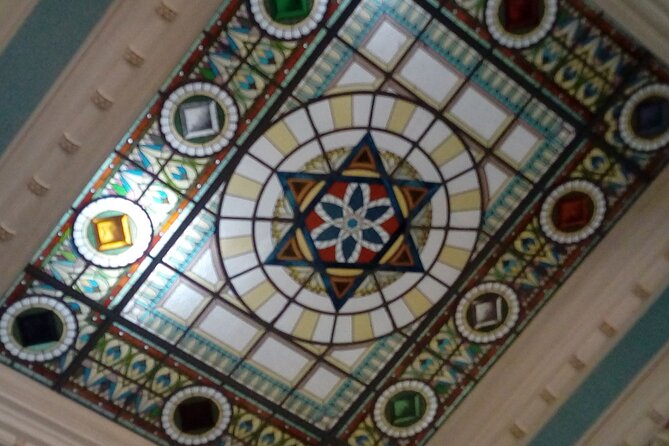
This tour is built like a short narrative arc: architecture, neighborhood change, then the Holocaust years, then a closing look at Jewish cultural remnants. It is the kind of route that helps you make sense of Riga as a living city, not just a postcard stop.
The best part for me is that you get multiple angles of the same story. You see how Jewish influence shows up in buildings and street-level geography. Then you move into memorials where dates, places, and the scale of loss become impossible to ignore. You also get enough time at each stop to look around, read what is there, and ask questions without feeling rushed.
It runs about 3 to 4 hours, which is a sweet spot. Long enough to learn real context, short enough that you are not spending your whole day inside history. The tour also starts at 9:00 am, so you can still have your afternoon free to explore Old Riga after you get your bearings.
Price and value: what you pay, what you get, what costs extra
At $96.33 per person, this tour sits in the “pay once, get a guided route” category. You are not paying for a long bus excursion, you are paying for private transportation and a guide who can shape the pace around your questions.
The tour includes private transportation and guide services. Entrance is listed as free at each stop, but there are two donation items you should budget for in your planning:
- A donation for the synagogue required on site
- A donation to the Riga Holocaust museum of €5.00 per person
So the true cost isn’t just the $96.33. Still, the value is solid because those memorial and museum moments often benefit from local support. The guide’s role matters here too, because it is one thing to stand in a place, and another thing to understand what you are looking at and why it was chosen.
Pickup and meeting at 9:00 am, plus Old Riga parking reality
You meet at 9:00 am. Pickup is offered, but there is an important local logistics detail: you are asked to wait outside your hotel or apartment, because the car is not allowed to park in Old Riga.
That actually makes the day easier. You are not hiking across the city trying to find your guide at a random corner. Just plan to be ready a few minutes early, and keep an eye out for the pickup vehicle near your place rather than expecting it to pull right up to the Old Riga sights.
Because the tour is private, you also avoid the slow-down that can happen on group tours. Your route stays flexible, and if you need a moment at a stop, you are not competing with other schedules.
Stop 1: Art Nouveau Riga and the Eisenstein and Berlin connection
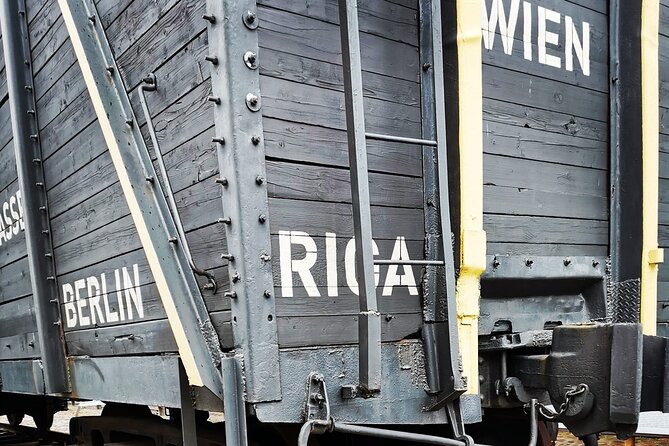
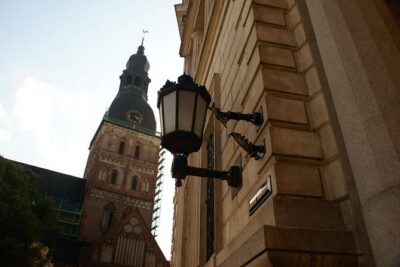
Your first stop centers on Riga’s Art Nouveau architecture, with a specifically Jewish thread that gives the buildings added meaning. You will see how parts of Riga were designed by the Jewish architect Mikhail Eisenstein, and in one of these buildings, philosopher Isaiah Berlin was born.
What I like about starting here is that it reframes the day. Instead of beginning with tragedy, you begin with creation. It helps you remember that Jewish life in Riga was not only about what was lost. It also included talent, ideas, design, and intellectual influence that shaped the city.
This stop is short, around 30 minutes, with free admission. In practice, that time is enough for a quick visual scan if you keep your eyes up and your mind switched on. If you enjoy architecture, you’ll probably want extra minutes, so ask your guide to point out the small details that matter, not just the big façade.
A minor consideration: if you are not into architecture, this first stop could feel like setup. But even then, the payoff comes later because you now understand the city’s style as part of its historical identity, not just décor.
Different day, same base in Riga:
- Riga Old Town walking tour★ 4.5 · 304 reviews
- Latvian food tasting tour at Riga Central market★ 4.5 · 241 reviews
- 2 countries! Hill of Crosses, Rundale Palace and Bauska castle★ 5.0 · 225 reviews
- Discover Riga Bike Tour★ 5.0 · 166 reviews
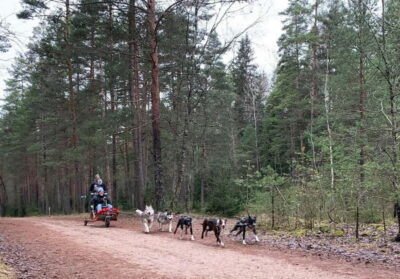
- From Riga: Husky Sledding or Wheel Kart Tour★ 4.9 · 155 reviews
Stop 2: Latgale Suburb, a ghetto-era neighborhood feel
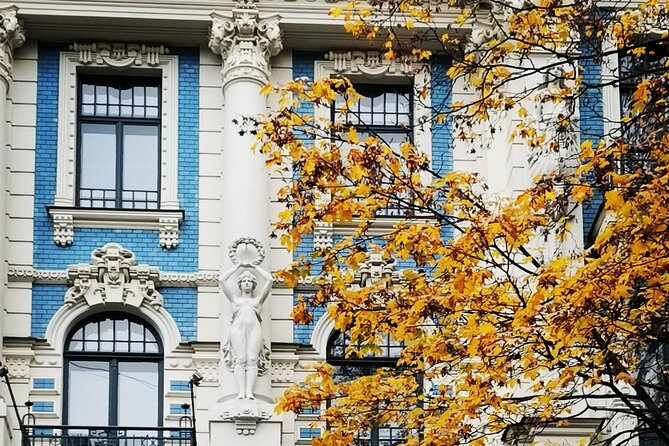
Next you head to the Latgale Suburb, described as former territory of the Riga Jewish Ghetto. The key point is that many buildings there still carry shapes and forms that reflect the WWII-era environment, about 80 years ago.
This is where the tour shifts from buildings as art to buildings as evidence. When you walk a neighborhood shaped by past confinement, the space itself becomes a kind of document. You start to understand how geography and architecture can trap people, and how even when the political situation changes, the built environment can preserve the memory of what happened.
This stop is also about 30 minutes with free admission. That feels right because you do not want to overstay in an area where the emotions can run high. Instead, you want a steady, guided walk that gives you context for what you are seeing and what you are not.
If you are sensitive to difficult content, it may help to let your guide know in advance. A good guide can calibrate how much is spoken at each moment without hiding what you came to learn.
Stop 3: Great Choral Synagogue Memorial and the July 4, 1941 event
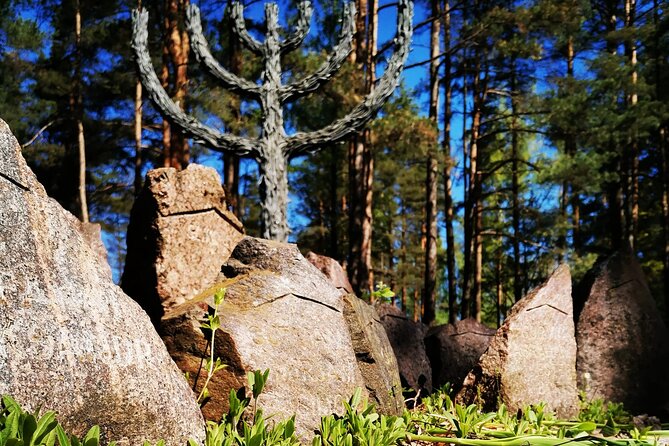
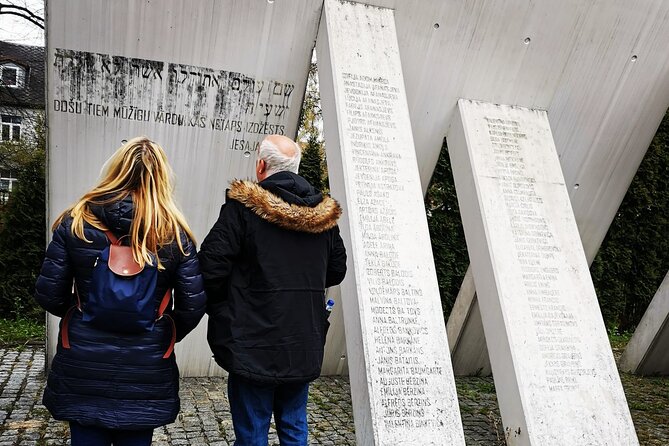
At the Great Choral Synagogue Memorial, the tour becomes explicit and personal. On July 4, 1941, more than 300 Jewish refugees from Lithuania and local Latvian Jews were herded into the basement of the synagogue, and the building was intentionally burned to the ground. There is now a memorial place marking this event.
This is a 15-minute stop, with free admission, but it is not a “quick look and move on” type of moment. Even in that short time, you will likely feel the weight of the facts. The guide’s job matters here: clear explanations can help you process the event without turning it into a rushed list of numbers.
What I value most is the combination of event detail and location awareness. You are not reading this in the abstract. You are standing near a place tied to the story, and that changes how you remember the information.
A practical tip: keep your phone use respectful. Photos can help you remember later, but in memorial spaces, a few seconds of silence can mean more than a dozen shots.
Stop 4: Rumbula Forest Memorial and the scale of late-1941 killings
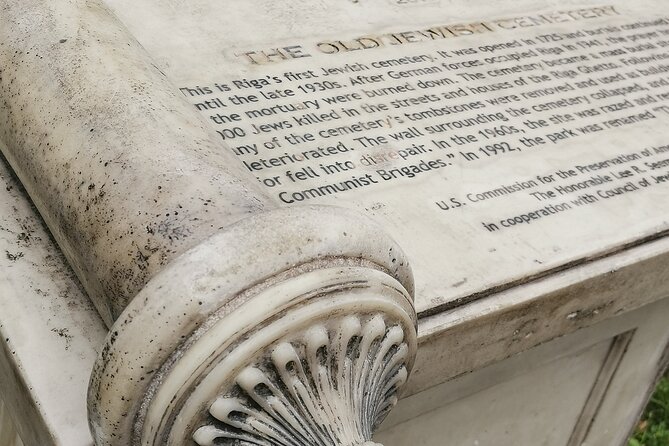
Then you move to the Rumbula Forest Memorial, one of the most difficult stops on the route. In November 1941, Nazi forces decided to completely exterminate Jewish prisoners of the Riga ghetto. During the events on November 30 and December 8, 1941, more than 25,000 people were killed, including about 1,000 Jews deported from Germany. The memorial was fully opened on November 29, 2002.
This stop lasts about 1 hour, with free admission, and I think that time is important. When you hear numbers like 25,000, your brain needs time to slow down and absorb what the scale means. An hour also gives you room to read whatever interpretive information is posted there and sit with your own thoughts.
This is not a place to rush for content. It is a place to listen to your own response while your guide helps frame what you are seeing. The best guides keep the focus on dignity and truth, not shock value.
If you’re traveling with someone who becomes overwhelmed easily, you’ll still be able to move at the group pace, but remind yourself the goal is understanding, not endurance training.
Stop 5: Riga Ghetto and Latvian Holocaust Museum, a structured way to learn
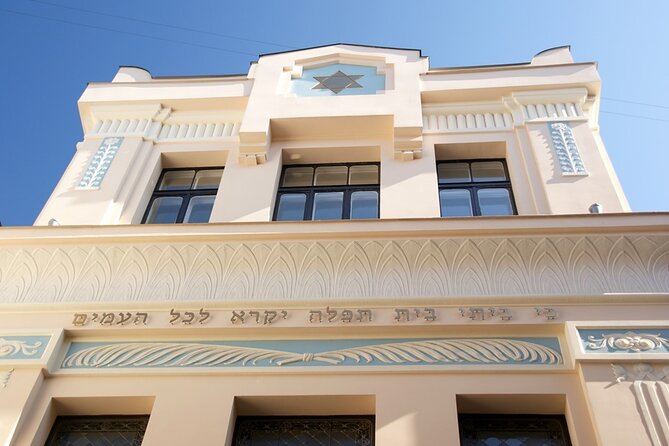
After the forest memorial, you transition to the Riga Ghetto and Latvian Holocaust Museum. This museum is described as a window into the story of the Riga Ghetto, the Holocaust in Latvia, and Jewish life in Latvia before the Holocaust.
You have about 30 minutes here, with free admission, though there is that €5.00 per person donation mentioned for the museum. That donation detail matters because it changes how you prepare your budget. It is also worth treating the museum as a living educational space rather than a quick photo stop.
What makes this stop valuable is its role as a bridge. By the time you reach the museum, you have already walked through neighborhood remnants and memorials tied to specific events. Now the museum helps you connect those moments to a wider timeline and a clearer picture of what life looked like before the violence.
If you like to leave a site with something tangible, you might find books available there. The guide can suggest what to look for, based on what you found most important earlier in the day.
Stop 6: Riga synagogue on Peitavas Street, Art Nouveau with ancient Egyptian motives
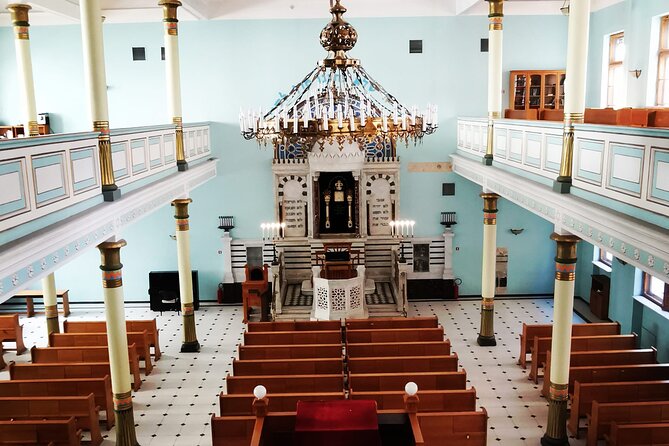
The final stop is the Riga Synagogue on Peitavas Street, an Art Nouveau landmark built 1903 to 1905. It is designed in Art Nouveau style with ancient Egyptian motives, which is a fascinating blend once you notice it in person.
This stop lasts about 45 minutes, with free admission, but it includes a key on-site requirement: a synagogue donation is required. So plan for that in your spending and keep a small amount of cash or card ready, depending on what the site accepts.
I like ending here because you see continuity. You see how Jewish cultural monuments can still be read through architecture, style, and craftsmanship. After the heavy memorial stops, this feels like a return to the idea that communities build places meant to last.
Also, it is not just a pretty façade moment. The guide can help you connect the building’s design to the wider cultural identity of the time, so it is more than decorative sightseeing.
How the guide shapes the experience, and why you should ask questions
A private tour lives or dies by the guide. In this case, your guide is Armands Latvia Guide, and the tone of the day is respectful with clear explanations.
The best part is that you can ask questions in real time. If you want clarification on dates, connections between neighborhoods, or how refugee history shaped the city, you can ask. That matters because Holocaust history often has overlaps, and a live guide can untangle it faster than reading a placard.
There is also flexibility built into the approach. If something is closed due to the calendar, like Shabbat, a good guide will adjust and bring you to another place of interest instead of just ending early. That keeps the tour feeling whole rather than patched.
One thing I especially like is honesty when an answer is not immediately known. It is better to get a correct explanation later or to get a grounded response than to hear guesswork.
Timing, pacing, and what to bring for a respectful day
The tour is about 3 to 4 hours, and it is paced across six stops. That makes it manageable even if you are not used to long museum days.
For a respectful, smooth experience:
- Wear comfortable shoes, because you will be walking and standing at multiple sites
- Keep layers handy. Riga weather can shift fast, and standing still at memorials can feel colder
- Think about how you want to take notes or photos, especially at memorial points
Dress code is very relaxed. It says any dress code is fine as long as you are not naked. If your head is uncovered, a kipa will be provided. If you already wear a cap, hat, scarf, or other head covering, you can keep it as is.
That kipa detail is small, but it’s a nice touch. It shows the tour is prepared to handle cultural practices without making it awkward.
Who this tour suits best, and who might not love it
This is a strong fit if you:
- Want a guided route that connects Riga’s architecture to Jewish history
- Prefer a focused half-day tour over lots of separate stops
- Are okay with a somber topic and want context rather than vague statements
- Like asking questions and tailoring how much you want to understand at each place
It might be less ideal if you:
- Want mostly upbeat stories or lots of carefree sightseeing
- Get emotionally overwhelmed quickly and prefer a gentler introduction
- Expect every stop to be long. Several are short, like 15 and 30 minutes, by design.
The good news is the guide can steer the balance within reason. You can ask for more time at a stop that hits you hardest, and you will generally have room to do that.
Book it or not: my practical recommendation
If you want Riga to make sense at a human level, I’d book this tour. The mix of Art Nouveau connections, former ghetto neighborhood context, and memorial sites gives you a clearer picture than any single museum stop could.
I also think it’s good value for what you get: private transportation, a guide who can answer questions, and time at each place that supports real learning. Just go in prepared for somber content, and budget for the on-site donations, especially the €5 museum donation and the required synagogue donation.
If you are short on time in Riga but want a meaningful route that respects history instead of skimming it, this is one of the better ways to spend a half-day.
FAQ
What is the tour price?
The price is $96.33 per person.
How long is the Riga Jewish History Tour?
It runs about 3 to 4 hours.
What time does the tour start?
The start time is 9:00 am.
Is pickup offered?
Yes, pickup is offered. You should wait outside your hotel or apartment because the car is not allowed to park in Old Riga.
Is the tour private?
Yes. This is a private tour, so only your group participates.
Is the tour offered in English?
Yes, it is offered in English.
Are entrance tickets included?
Admission tickets are listed as free for the stops, but donations are required on site, including a donation for the synagogue and €5.00 per person for the Riga Holocaust museum.
What dress code should I follow?
The dress code is flexible. Anything is fine as long as it is not naked.
Will you provide a kipa?
Yes. A kipa will be provided if your head will not be covered by a cap, hat, scarf, or other head covering.
What is included in the price?
The tour includes private transportation and guide services.
Can I cancel for a full refund?
Yes. Free cancellation is available, and you can cancel up to 24 hours in advance for a full refund.
Newest entries out of Riga
- Riga Beer Bike
- Sunrise or sunset SUP/kayak Adventure in the bog from Riga
- Create your own Gin at Riga Gin Laboratory
- Small Group – Hill of Crosses, Jelgava and Jurmala / 2 Countries
- Discover Riga’s most Photogenic Spots with a Local
- Riga City Tour and Panoramic Ride on the Riga Eye
- Private Chocolate Masterclass in Old Town of Riga
- Day trip to Tallinn from Riga
Tours, compared.

Latvian food tasting tour at Riga Central market
Read our review →
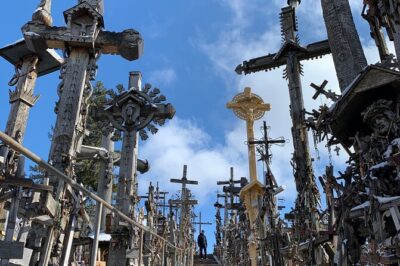
5,5 Hour Small Group Tour to Hill of Crosses from Riga
Read our review →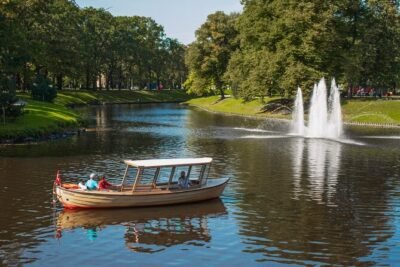
Riga Sightseeing Tour by Canal Boat with Audioguide
Read our review →