
Reviewed · SOVIET BUNKER TOURS
Private Soviet Riga tour
Soviet Riga clicks fast. This private tour strings together Soviet-era landmarks into one clear story, and I like that the English guide keeps it conversational, with room for questions as you walk. I especially liked the way the guide connects the big events to real human experience, with Edvards praised for weaving his own family perspective into the stops. The only watch-out is that it is a 2-hour on-foot walk, and the topic range can get heavy.
You will also save money on entry fees because every listed stop is marked as free. Plus, the route is built around key symbols, not random photo spots, so you learn why each place matters, including how some Soviet-era structures changed use after the collapse.
In This Review
- Key things you will like on this Soviet Riga tour
- What this private Soviet Riga walk is really about
- Price and group size: when $180.62 per group makes sense
- Where you start and end, and how that affects your day
- Stop-by-stop: the Soviet story across 10 Riga landmarks
- 1) Latviešu strēlnieku laukums: Soviet eras in one square
- 2) Museum of the Occupation of Latvia: deportations to Siberia
- 3) 1991 Barikazu Laukums: the barricades era
- 4) Baltic Way Footprint Monument: non-violent resistance, explained
- 5) Freedom Monument: why it survived
- 6) Nativity of Christ Cathedral: religion under Soviet rule
- 7) Former Hotel Latvia, now Radisson Blu Latvija Conference & Spa Hotel: western tourists, KGB bugging
- 8) Brīvības iela: street-name shifts and Soviet architecture details
- 9) KGB Building: the HQ and the view toward Siberia
- 10) Dailes Theatre: Soviet architecture and the Soviet collapse
- What makes the guide experience matter (and why Edvards is repeatedly praised)
- Who should book this tour
- Should you book the Private Soviet Riga tour?
- FAQ
- What is the price for the Private Soviet Riga tour?
- How long does the Soviet Riga tour last?
- Is the tour private?
- Where do we meet, and where does the tour end?
- Do the listed stops require admission tickets?
- Is hotel pick-up or drop-off included?
- Are there any rules for children or service animals?
Key things you will like on this Soviet Riga tour
- A private, question-friendly format so you are not stuck with a noisy group schedule
- Free admission stops across major Soviet-era landmarks and memorials
- A guided timeline you can follow from Stalin-era themes to the Soviet collapse
- Soviet-era everyday details like hotel life, street names, and religious policy in the USSR
- The KGB Building viewpoint topic including how high the vantage point is described
- An independence-focused ending arc from 1991 barricades to Riga’s Freedom Monument
More Soviet-era places you can get inside:
What this private Soviet Riga walk is really about
This is not a broad “see the sights” loop. It is a guided walk that treats Riga like a political map, where monuments, street names, and even buildings tell you what power looked like day to day.
I like that the tour stays tightly focused on the Soviet story, but it never feels like a lecture with no payoff. The guide is in your orbit, and because it is private, you can steer your questions toward the parts that actually interest you, whether that is deportations, independence, or the way the USSR handled religion and western presence.
Price and group size: when $180.62 per group makes sense
The price is $180.62 per group, up to 15 people. That is the key to thinking about value.
For two people, you might feel like it is a “choose a guide once and go all-in” kind of cost. For a small group, it can become a smart deal because you are paying for one professional guide and getting a route built around very specific sites. At the maximum group size, the math works out to about $12 per person, which is strong for a guided, English-language, private 2-hour walk.
Also, the tour includes local taxes and a professional guide, and the stops listed all have free admission, so you are not hit with extra ticket costs once you arrive.
Where you start and end, and how that affects your day
You start at Latviešu strēlnieku laukums in the Centra rajons area. You end at Dailes Theatre on Brīvības iela, 75, also in Centra rajons.
That ending point matters. The tour finishes around a 15-minute walk from the old town area, so if you want to continue sightseeing afterward, plan on a gentle walk to connect with other central sights. If you have dinner reservations in the old town, you may want to build in that time.
No hotel pickup or drop-off is listed, so you will want to navigate to the meeting spot on your own or via nearby public transportation.
Stop-by-stop: the Soviet story across 10 Riga landmarks
This route moves like a timeline in motion. You will bounce between political symbolism and the “what it meant in real life” angle, so it stays clear instead of becoming a blur of monuments.
The tour is listed as about 2 hours, with each stop roughly 10 to 15 minutes. That pace is fast enough to cover a lot, but slow enough that you can ask follow-up questions if you want.
A few more Riga options side by side
- Private Riga Old Town Walking Tour★ 5.0 · 62 reviews
- Private Full-Day Trip to Turaida, Sigulda, and Cesis★ 4.5 · 52 reviews
- Ultimate Husky dog sledding experience in Latvia – Private tour from Riga★ 4.5 · 45 reviews
- Private trip – Hill of Crosses / 2 countries in 1 day★ 5.0 · 44 reviews
- Full-Day Private Trip to Cesis, Sigulda and Turaida from Riga★ 4.5 · 42 reviews
1) Latviešu strēlnieku laukums: Soviet eras in one square
Your first stop sets the stage with a brief overview of the Soviet period. The tour frames it through different eras, from Stalin to Gorbachev, using this square as the starting point.
You will also focus on the Latvian red riflemen and why their monument matters in the wider conversation about Soviet cultural heritage. This is a helpful opener because it tells you how Soviet messaging was tied to Latvian figures and local memory, not just distant Moscow.
A small consideration: if you prefer pure independence-focused history, this first stop can feel more Soviet-symbol heavy than you expect. But it works, because the later independence stops make more sense when you understand the earlier narrative.
2) Museum of the Occupation of Latvia: deportations to Siberia
Next comes the Museum of the Occupation of Latvia, with the topic centered on deportations to Siberia. The tour says it will cover the reason, scale, and impact of those deportations.
This stop is the emotional heart of the route. It is also short, about 10 minutes, which means you get the framing and the meaning of the topic, not a full museum experience. If you want deeper reading, you might later come back on your own for more time in the exhibits.
The plus: the guide can connect the themes to the monuments and streets you are seeing right after, so the story does not bounce around.
3) 1991 Barikazu Laukums: the barricades era
At 1991 Barikazu Laukums, you shift from Soviet oppression to Latvia’s pushback. The tour calls this the climax of the fight for independence and explains the era of the barricades.
This is a strong midpoint because it changes the emotional tempo. Instead of explaining control, it focuses on resistance. You should leave this stop with a clearer sense of how quickly history can pivot when people decide to act together.
A consideration: this section is brief, so if you are the kind of person who likes to memorize details and dates, you may want to take notes or ask the guide for the overview you need.
4) Baltic Way Footprint Monument: non-violent resistance, explained
Then you get the Baltic Way footprint monument, where the tour explains it as the largest non violent anti Soviet demonstration in the Baltics. It also covers logistics, the mood of the time period, and impact.
What I like here is the “how” part. The route does not just say it happened. It treats the event like a movement, including how people coordinated and what the atmosphere felt like. That can be easier to understand than a purely political description.
If you want a hopeful angle in the middle of heavier topics, this stop delivers.
5) Freedom Monument: why it survived
After that comes the Freedom Monument, Riga’s most iconic one. The tour focus is on its significance and how it survived the Soviet period.
This stop turns the abstract idea of freedom into a physical object you can see. It also helps you compare earlier Soviet symbolism from stop 1 with what Riga chose to protect and highlight later.
Potential drawback: if you are already familiar with this monument from photos, the value here is not the view, it is the guided explanation. Go in expecting context, not just sightseeing.
6) Nativity of Christ Cathedral: religion under Soviet rule
Next is the Nativity of Christ Cathedral, where the tour discusses the role and treatment of religion during the Soviet period.
This stop is useful because it shows Soviet control as something that reached beyond politics and into daily belief systems. It also balances the route by adding a cultural and spiritual lens.
One thing to consider: religion can be personal for people. Even if you are not religious, the way the USSR handled faith can still be sensitive. The guide’s job here is to keep it factual and understandable, and this route is designed to do that.
7) Former Hotel Latvia, now Radisson Blu Latvija Conference & Spa Hotel: western tourists, KGB bugging
The tour then moves to Radisson Blu Latvija Conference & Spa Hotel, Riga, formerly Hotel Latvia. The topic is fascinating: it was described as the only hotel where western tourists were allowed to stay in Soviet Riga, and the rooms were famously bugged by the KGB.
This is exactly the kind of detail that makes history feel real. You are not just looking at a building, you are seeing a system at work: hospitality with surveillance behind the scenes.
Consideration: if you are sensitive to the idea of spying, you will likely feel uneasy here. That unease is also part of the lesson, because it explains how control operated even in everyday “tourist” spaces.
8) Brīvības iela: street-name shifts and Soviet architecture details
Now you walk along Brivibas Iela, formerly Lenin street. The tour points out Soviet-era residential architecture examples and references Riga’s most famous fashion house, Rigas Modes.
This stop is a reminder that Soviet influence showed up in ordinary urban planning, not just government buildings. It is also lighter in tone because you get to talk about housing style and street life, rather than only memorials and police power.
If you like photography, you will find plenty of visual cues. Even if you do not, it still helps you connect the political story to what Riga looks like today.
9) KGB Building: the HQ and the view toward Siberia
Then comes the KGB Building, described as the headquarters of the Russian secret police in Latvia. The tour notes it is the highest building in Riga, and from the top you can see all the way to Siberia.
The stop also covers KGB recruitment methods and interrogation methods. That is heavy subject matter, and this is one reason the tour is best with a calm, clear guide who can explain without sensationalism.
Practical consideration: because the topic is so dark, it helps if you arrive ready to focus on meaning. This stop is designed to do that, but your mood matters too.
10) Dailes Theatre: Soviet architecture and the Soviet collapse
The final stop is Dailes Theatre, with a discussion of Soviet-era architecture and the collapse of the Soviet union.
This ending works well because you finish with an architectural marker. It lets you see how Soviet design and state identity were built into public life. Then the tour ties it back to the end of the Soviet period.
It is also an easy landing after the heavy topics. The building itself gives you a visual “wrap-up,” and the tour ends right here.
What makes the guide experience matter (and why Edvards is repeatedly praised)
The biggest strength of this tour is the guide style. Edvards is specifically praised for being extremely passionate about the topic, with immense knowledge delivered in a way that is easy to follow. That combo matters on tours like this, because if the pace or wording is off, the story can turn into confusion fast.
You also get a personal-story element. One of the standout compliments is that he weaves the history with his own family experience, which helps you feel the stakes behind the monuments. That personal angle does not replace the facts. It gives the facts weight.
Finally, the tour can be tailored to your requirements. Since it is private, you can nudge the route emphasis, or ask questions you care about, without worrying about holding up a larger group.
Who should book this tour
This is a great fit if you want a Soviet Riga overview that is organized, walkable, and built around key places. It is also ideal if you like asking questions and getting direct answers instead of reading plaques and hoping you guessed the context right.
I would especially recommend it if you care about the difference between Soviet messaging and Latvian resistance, because the route goes from Soviet symbolism to deportations, to barricades, to the Baltic Way, and then to independence markers like the Freedom Monument.
If you only want pretty views and low-stress sightseeing, this may feel too focused on power and conflict. You can still enjoy it, but you should go in knowing the emotional tone is part of the point.
Should you book the Private Soviet Riga tour?
Book it if you want one structured walk that connects the main themes of Soviet Riga, with a private guide who can explain clearly and answer your questions. The free admission stops also make it a straightforward value play.
Skip it or think twice if you do not like historical topics that include deportations and interrogation, or if you need a very slow, relaxing pace. Also, because it ends at Dailes Theatre, plan your next move so the 15-minute walk back toward the old town area does not disrupt your timing.
FAQ
What is the price for the Private Soviet Riga tour?
The tour costs $180.62 per group, for up to 15 people.
How long does the Soviet Riga tour last?
It runs for about 2 hours.
Is the tour private?
Yes. It is a private tour, so only your group participates.
Where do we meet, and where does the tour end?
You start at Latviešu strēlnieku laukums in Centra rajons and end at Dailes Theatre, Brīvības iela 75, Centra rajons.
Do the listed stops require admission tickets?
No. Every stop in the itinerary is marked as free admission.
Is hotel pick-up or drop-off included?
No. Hotel pick-up and drop-off are not included.
Are there any rules for children or service animals?
Children must be accompanied by an adult. Service animals are allowed.
Newest entries out of Riga
- Riga Beer Bike
- Sunrise or sunset SUP/kayak Adventure in the bog from Riga
- Create your own Gin at Riga Gin Laboratory
- Small Group – Hill of Crosses, Jelgava and Jurmala / 2 Countries
- Discover Riga’s most Photogenic Spots with a Local
- Riga City Tour and Panoramic Ride on the Riga Eye
- Private Chocolate Masterclass in Old Town of Riga
- Day trip to Tallinn from Riga
Soviet Bunker Tours, compared.
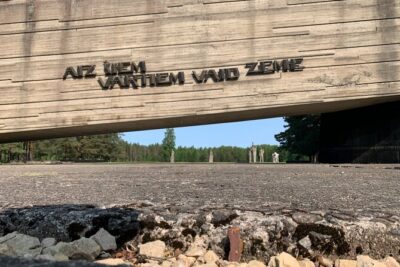
Private Day Tour to Sigulda, Turaida Castle and Soviet Bunker
Read our review →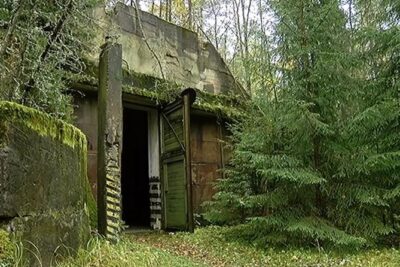
Full-Day Private Trip to Nuclear Missile Base and Secret Soviet Bunker
Read our review →Soviet Bunker, Seaside Fortress + Authentic BBQ lunch with beer
Read our review →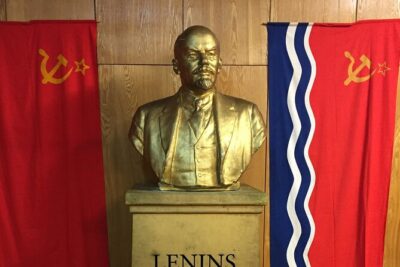

Soviet Riga: Vintage Car Tour & Life Behind the Curtain
Read our review →More Riga days like this